

Tepid Tariff-induced Inflation and Weak Jobs Data Set The Tone for September Rate Cut
Austin Or, CFA
Highlights
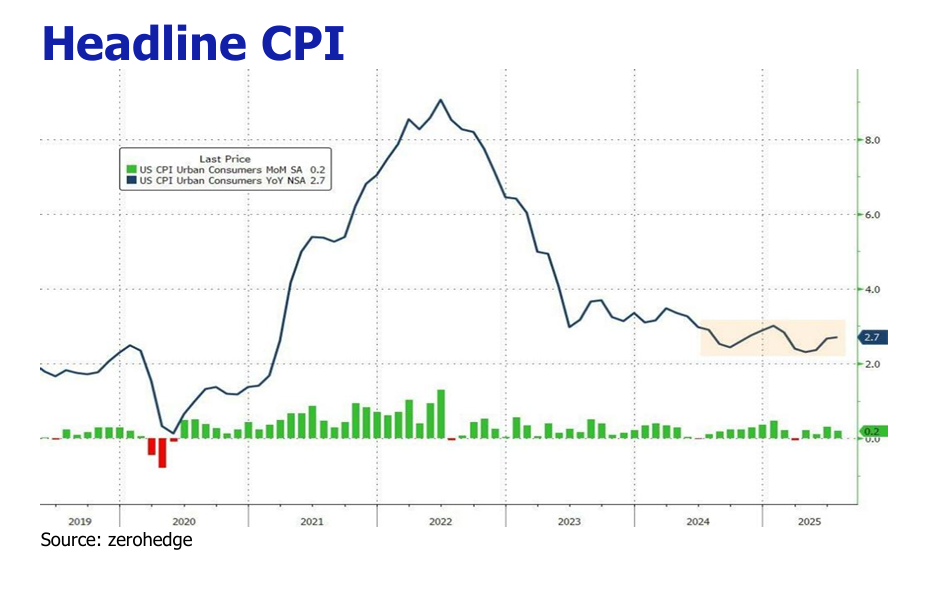
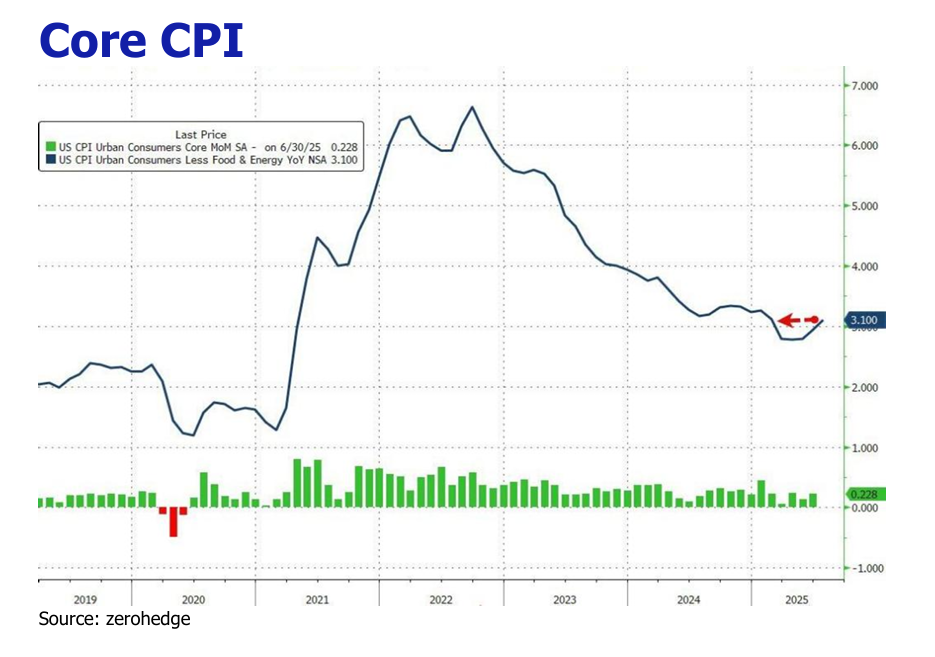
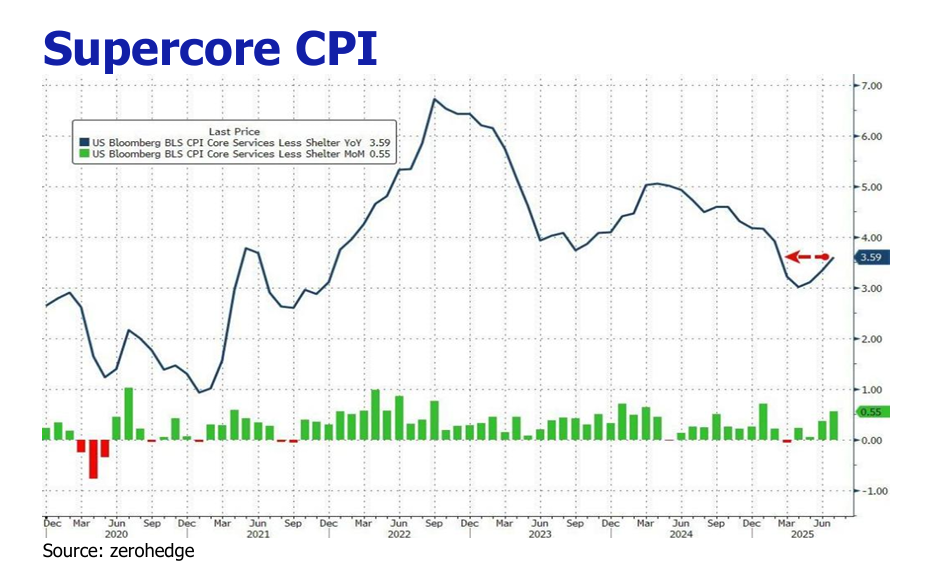
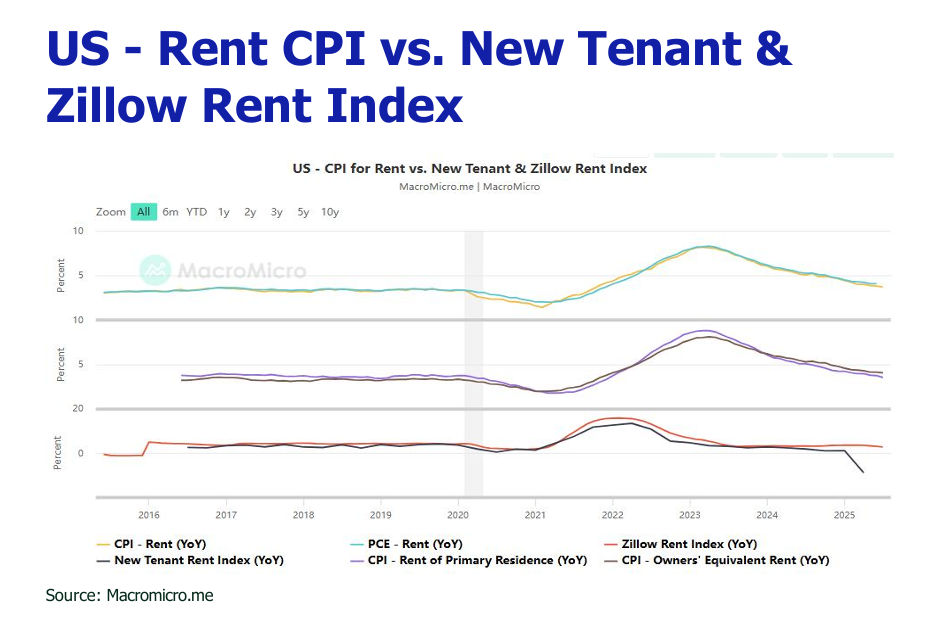
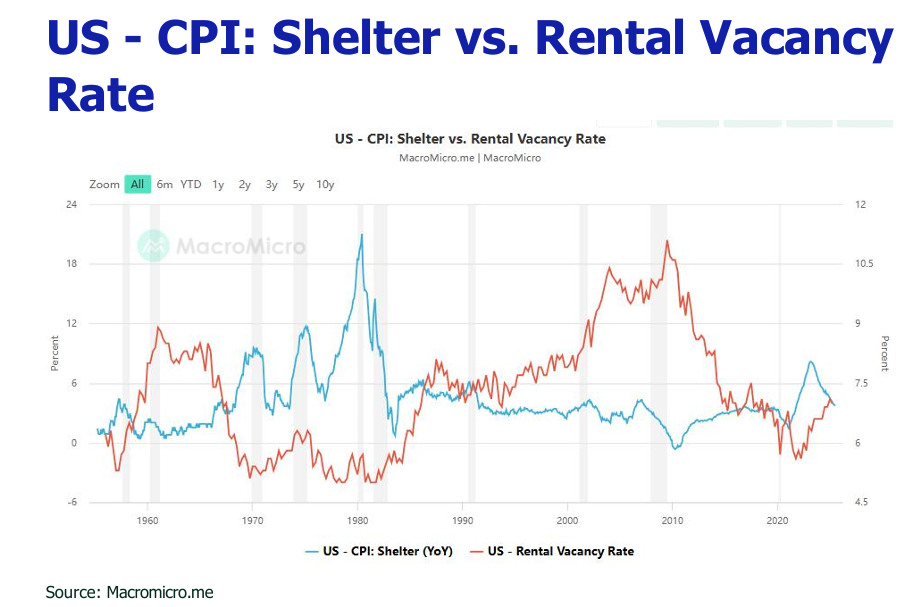
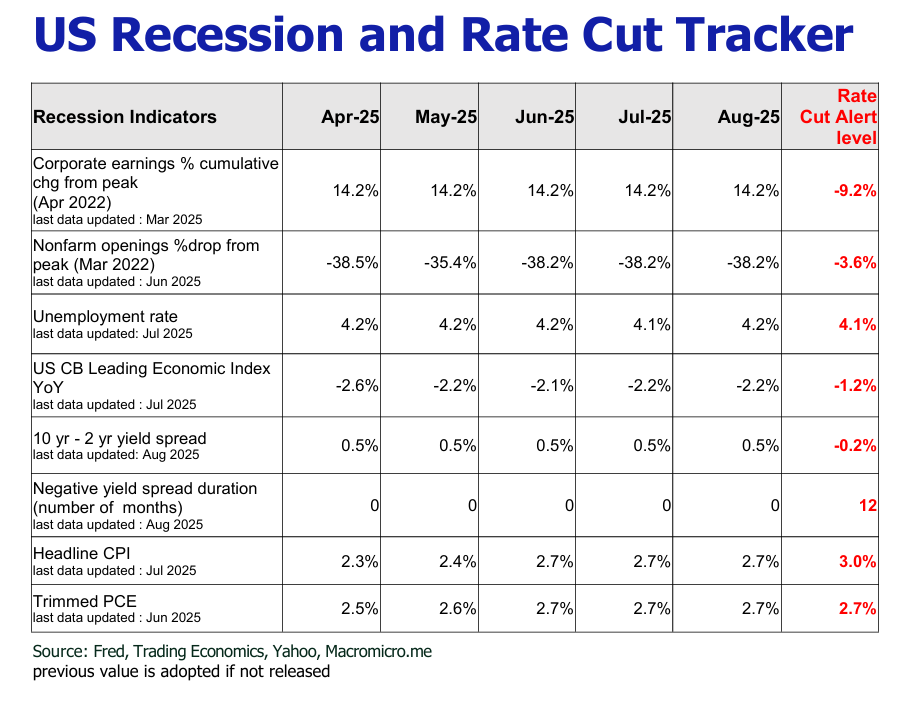
July 2025’s inflation canvas splashed a cooling headline CPI (+0.2% MoM and +2.7% YoY), yet core (+0.3% MoM, +3.1% YoY) and supercore (+0.5% MoM, +3.7% YoY) measures simmered with persistent heat from shelter and tariff-spiked goods.
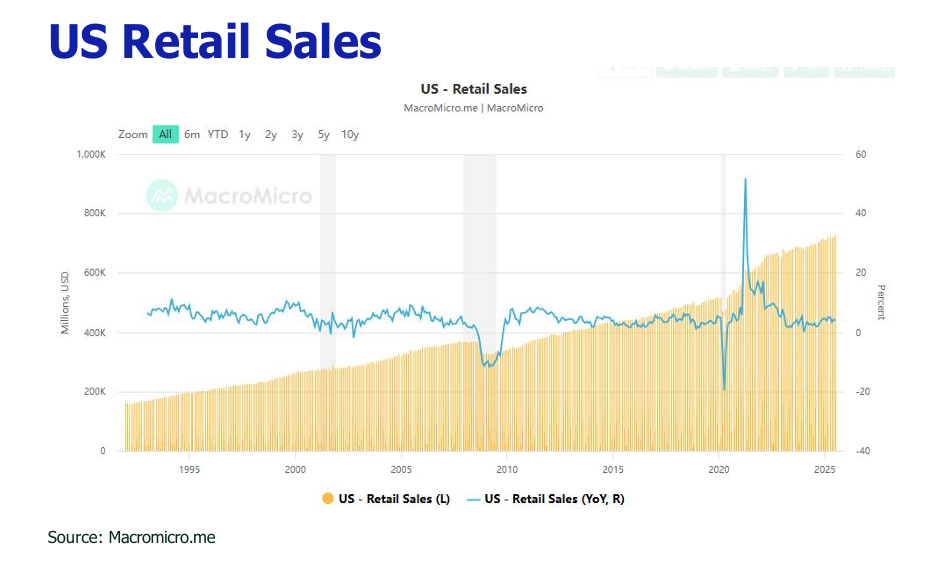
July’s retail scene sparkled with a +0.5% MoM rise, buoyed by strong auto sales linked to expiring credits and robust discount-driven online shopping.
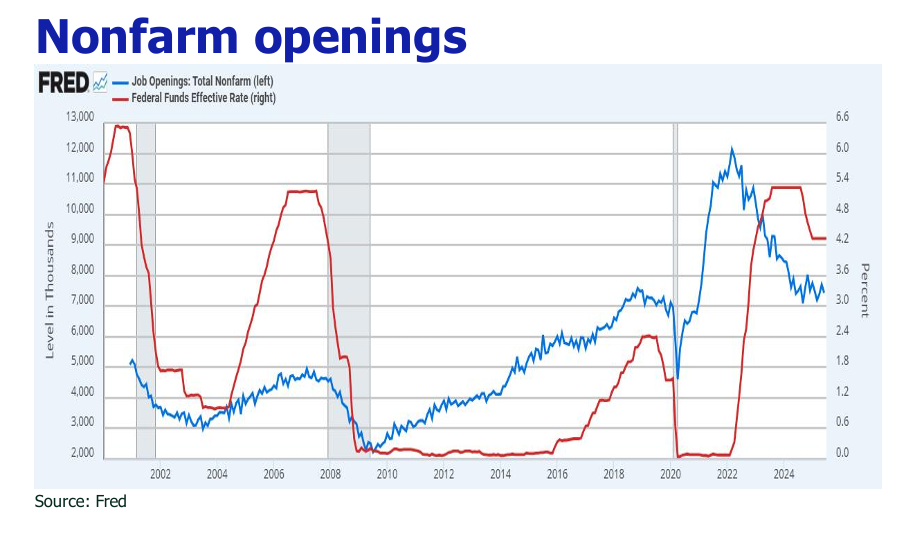
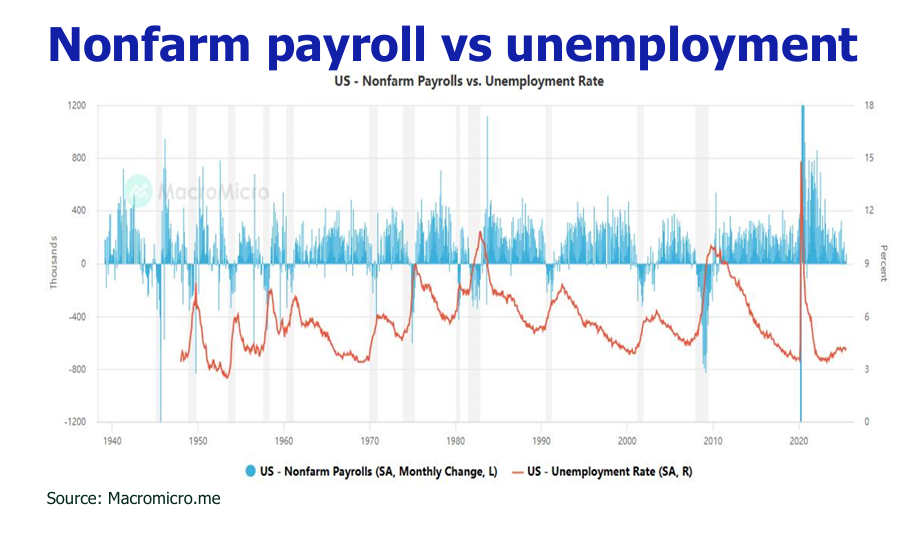
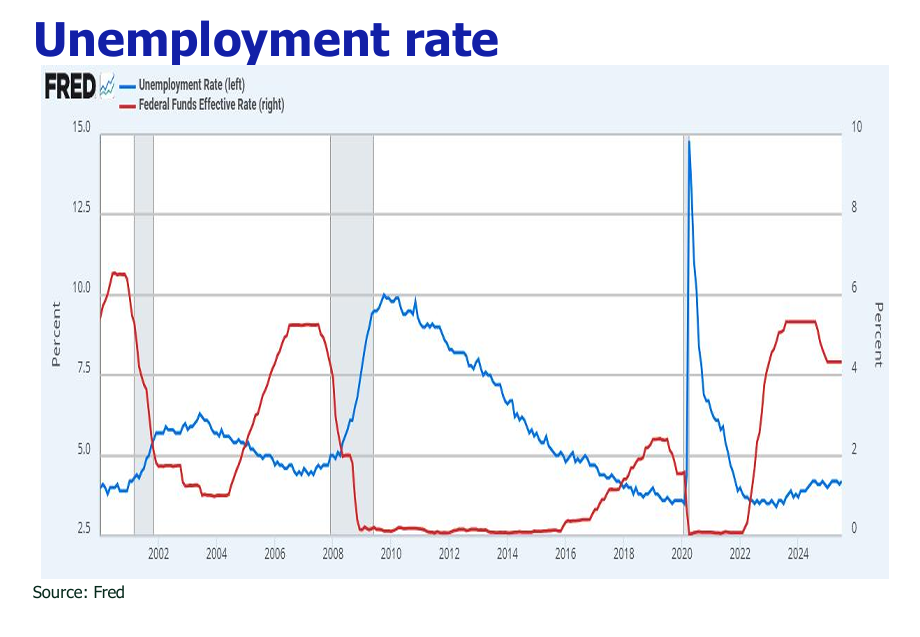
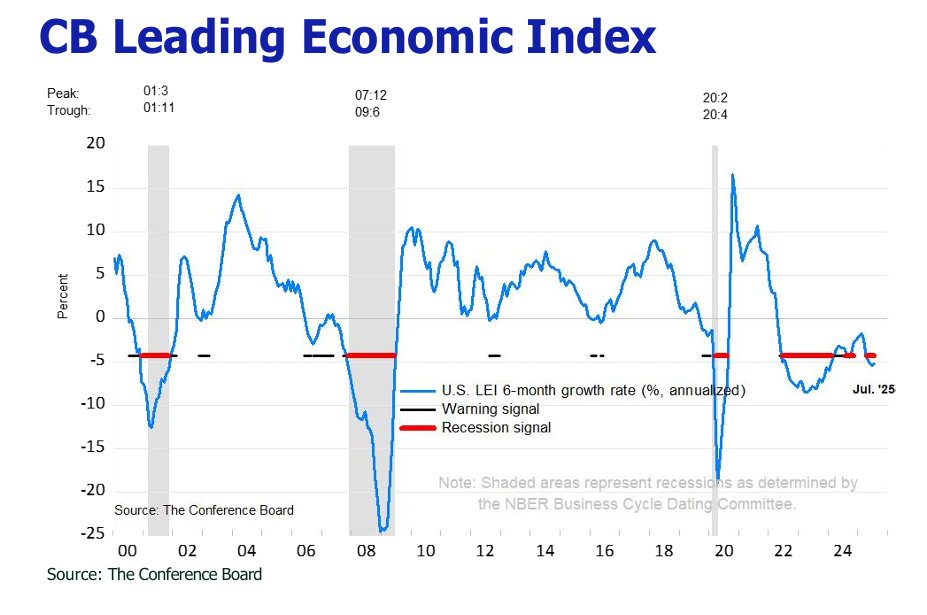
Abroad-based slowdown in the U.S. labor market was evident in July as job creation caught off guard with only 73,000 positions added, preceded by near-stallion in previous months, and the unemployment rate climbed to 4.2%.
Inflation’s slow burn is poised to flare as foreign producers and depleted inventories lead to more tariff costs being passed to consumers, though a faltering labor market and restrained spending may keep the blaze in check.
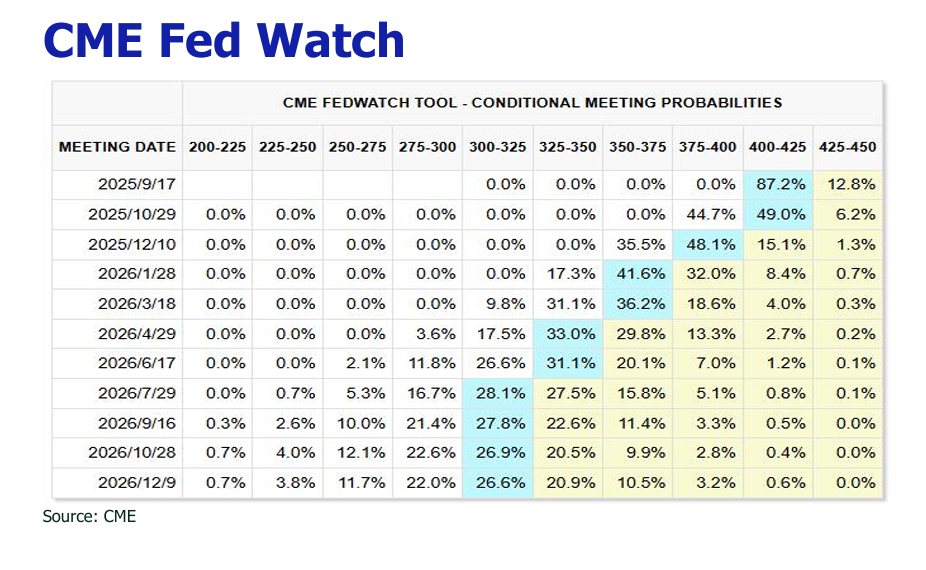
Dimming job market prospect, deferred tariff pressures, a measured ascendance of inflation and Powell’s remark of restrictive policy shift in Jackson Hole have woven an 87% market bet for a sleek 25 basis point Fed rate cut in September.
In August, the Hang Seng Index sustained a vibrant tune, closing above 25,000 with over 2% monthly surge, fueled by a tech stock frenzy and U.S.-China tariff truce optimism, with daily trading volumes pulsating between HK$200-320 billion.
Softer Inflation with Genial Tariff Pass-through
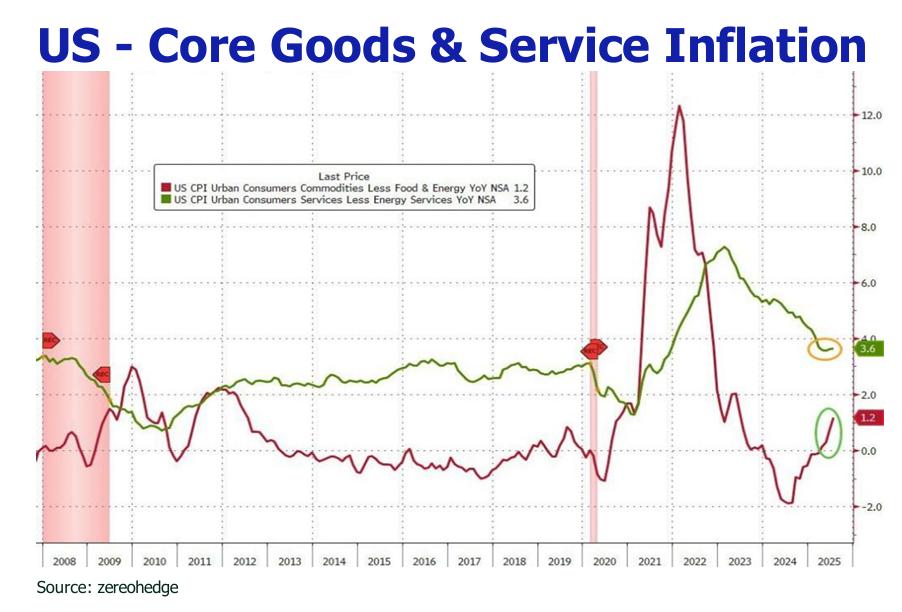
In July, US inflation data showed headline CPI rising 0.2% MoM (June: 0.3%) and 2.7% YoY, (unchanged from June), driven by a-1.1% MoM energy drop despite stable food prices and persistent shelter cost increases (+0.2% MoM, +3.7% YoY). Core CPI accelerated to +0.3% MoM (June: 0.2% MoM) and +3.1% YoY (June: 2.9% YoY), the highest since February 2025, fueled by shelter and rising core goods (+0.2% MoM; used cars +0.5%). Supercore CPI (core services ex. shelter) jumped +0.5% MoM and +3.7% YoY, led by transportation (+0.8%) and medical care (+0.7%). The inflationary pressure from tariffs persisted, albeit at a weaker pace than forecast in several sectors. Household furnishings and supplies, rose +0.7% MoM in July (after +1.0% in June), reflecting the impact of new tariffs on steel, aluminum, and consumer goods from China and other trading partners. Coffee prices surged +2.3% MoM (+14.5% YoY), driven by a 50% tariff on Brazilian imports effective August 7. Apparel and core commodities prices increased modestly by +0.1% MoM and +0.2% MoM respectively, while canned fruits and vegetables, typically import-heavy, remained flat.
Job Growth Shrivels as Unemployment Ticks Up
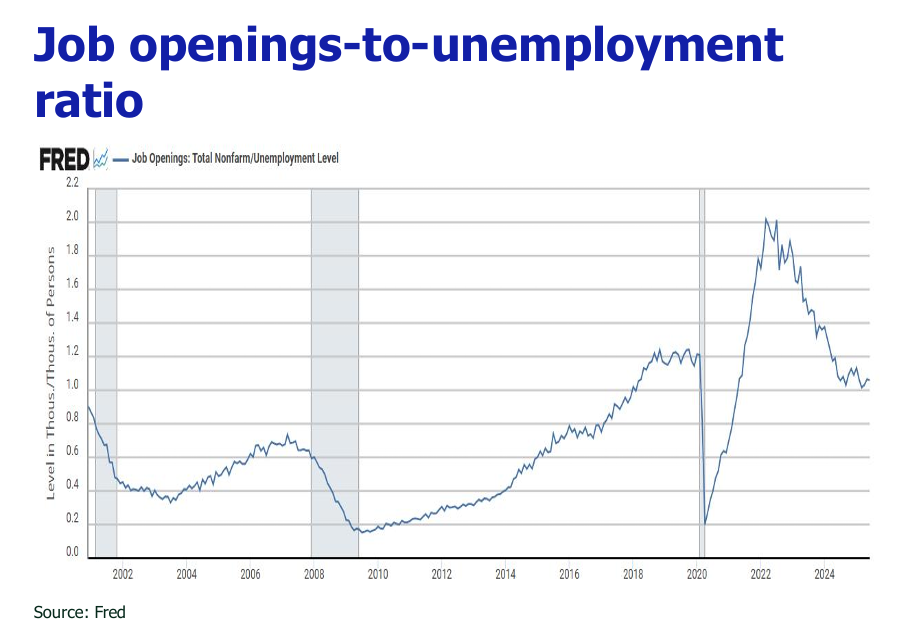
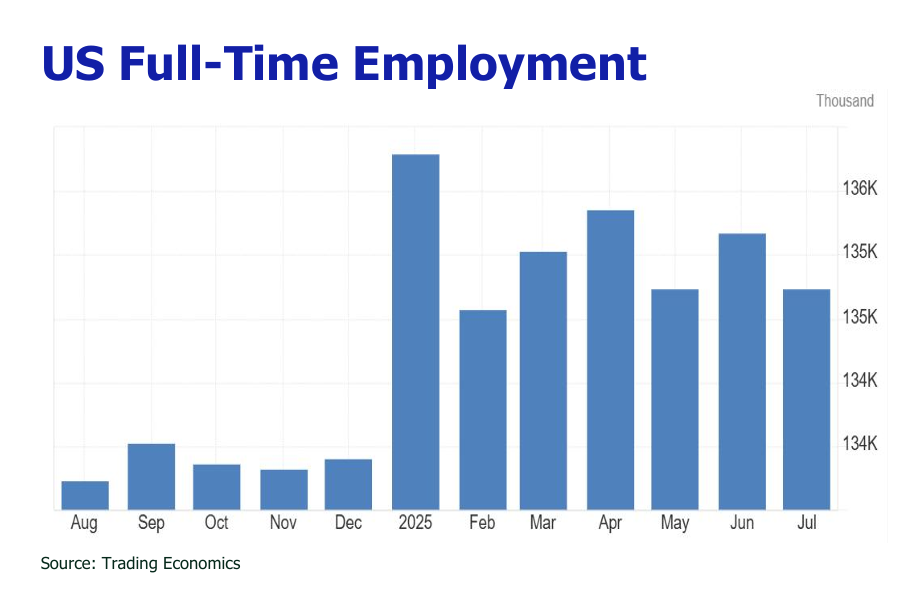
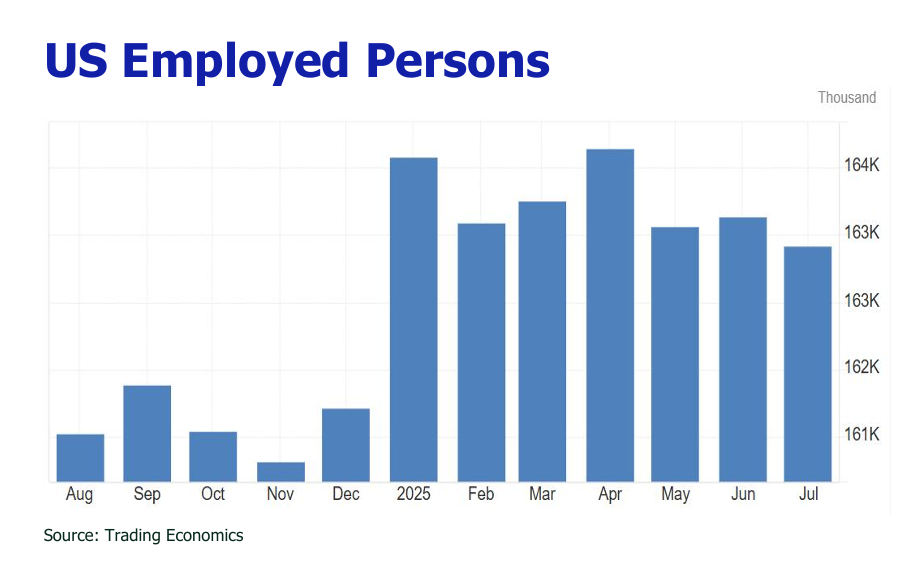
US Non-Farm Payrolls rose by a mere 73,000 in July, following sharply revised-down figures for May (125,000 to 19,000) and June (-133,000 to 14,000) and a far cry from the 105,000 expected, reflecting a slowing labor market driven by trade policy uncertainties, immigration restrictions, and federal efficiency cuts. The unemployment rate edged up to 4.2%, with the labor force participation rate dipping to 62.2%, the lowest since November 2022, as 38,000 left the labor force and long-term unemployment rose to 1.8 million. Job gains were concentrated in health care (+55,000) and social assistance (+18,000), while federal government jobs fell by 12,000, part of an 84,000 decline since January due to restructuring efforts. Manufacturing and professional services saw losses, exacerbated by high tariffs disrupting supply chains.
Retail Sales Hold Up on Autos and Discounts
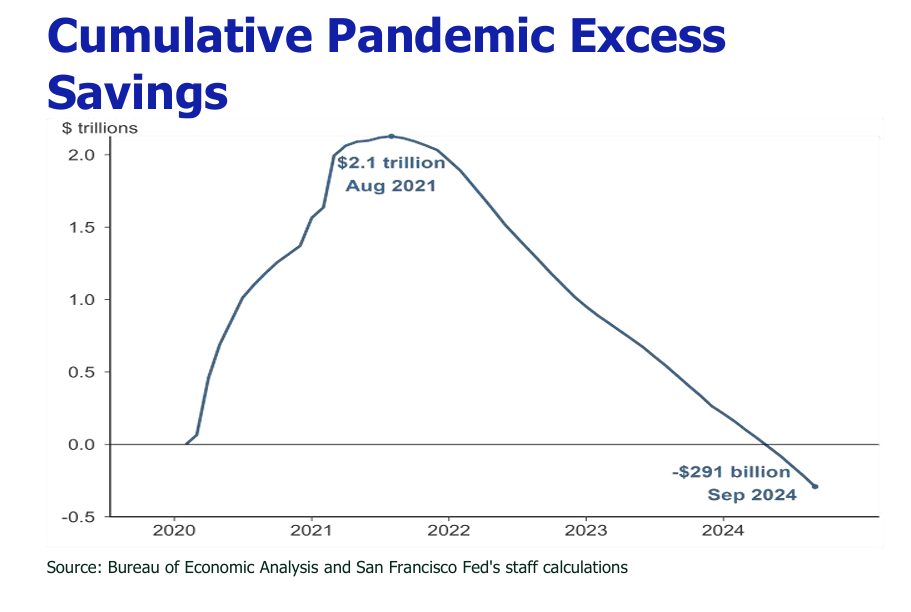
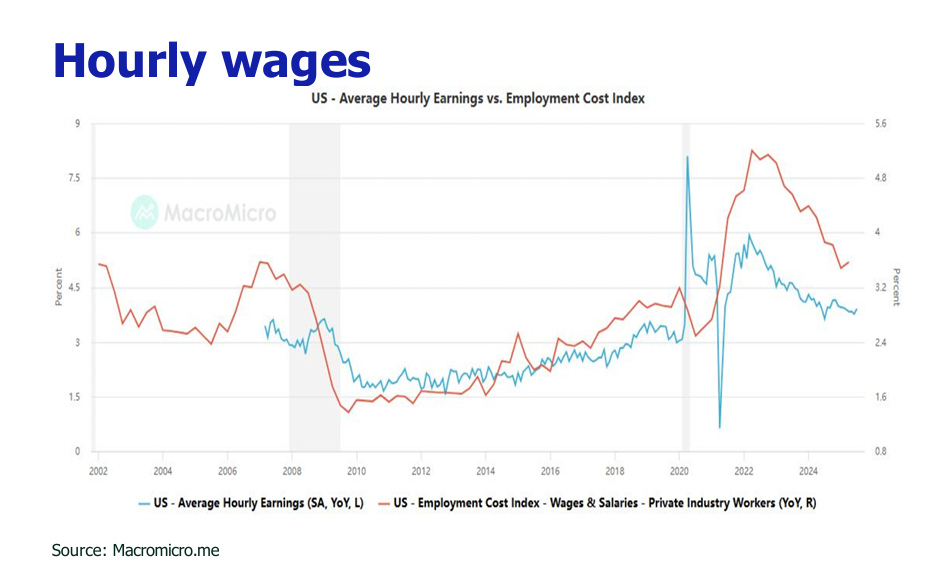
Retail sales increased 0.5% MoM (0.3% after adjusted for inflation) in July, a succession of 0.9% hike in June, driven by robust motor vehicle sales (+1.6% MoM) due to pre-expiration electric vehicle tax credit demand and furniture/home furnishings (+1.4%), while online sales gained 0.8% MoM as discounts by Amazon and Walmart offer bang for buck. Core retail sales (excluding automobiles, gasoline, building materials and food services) increased 0.5% after an upwardly revised 0.8% rise in June. Delayed tariff price increases and steady income growth (+0.3% MoM, +3.9% YoY) continue to fuel spending.
Prediction
1.Inflationary Pressures Is Set to March Higher at A Gradual Cadence.
Looking ahead, the
trajectory of CPI is poised to intensify as the temporary factors that muted the initial inflationary impact of tariffs begin to fade. While foreign producers have thus far absorbed a significant portion of the cost—keeping import price rises lower than expected—this dynamic is unsustainable as their profit margins shrink. Furthermore, the extensive stockpiling of goods by companies ahead of tariff implementation dates (such as in February and March 2025) created a buffer that delayed the full pass through to consumers; as these inventories now deplete, we project a stronger CPI surge in August and September, with firms projected to pass on a greater share of costs—Goldman Sachs estimates this will rise to 70%, up from the current 50/50 split with consumers. However, this building inflationary pressure, which challenges the Fed’s 2% target, will be tempered by a weakening labor market, evidenced by a meager 73,000 jobs added in July, cautious consumer spending, which may ultimately limit businesses’ ability to fully pass on all further costs amidst a slowing economy.
2. Inflation and Labor Data Cement September Rate Cut Odds.
July’s CPI data confirmed a cooling in headline inflation, primarily driven by declining energy prices and muted impacts from tariffs. The taming effect due to energy is expected to persist; forecasts from the U.S. Energy Information Administration (EIA) project Brent crude oil prices to fall from over $70 in July 2025 to an average of $58 in Q4 2025 and $50 in 2026. This anticipated decline, following OPEC’s planned output expansion of 411,000 barrels per day, should help further curb inflationary pressures.
Furthermore, the 90-day extension of the U.S.-China tariff truce on August 11 has delayed scheduled escalations until November, offering extra time for US importers to restructure supply chain to lower reliance on China, alleviating near-term inflationary pressure. Concurrently, a softening labor market, as signaled by July’s weak Non-Farm Payrolls report, prompted Chair Powell to signal an impending rate cut in September at the Jackson Hole Symposium.
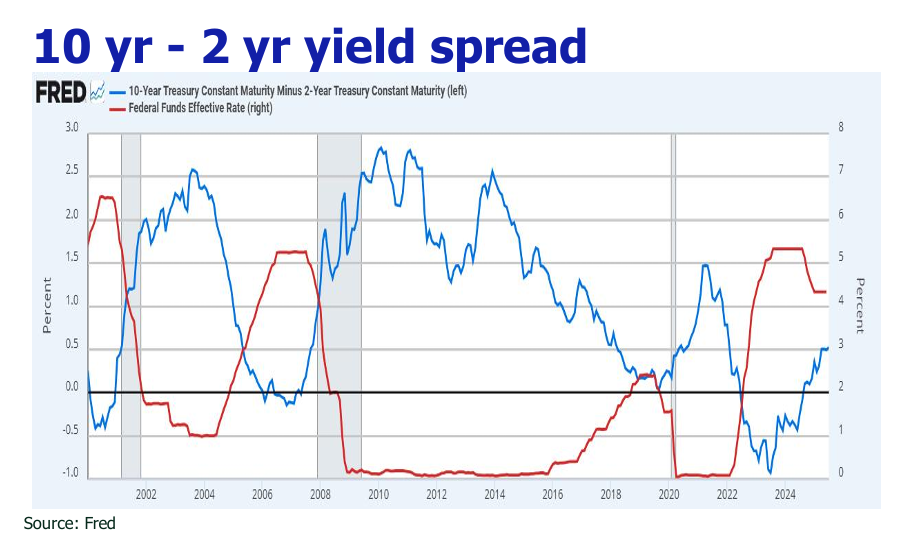
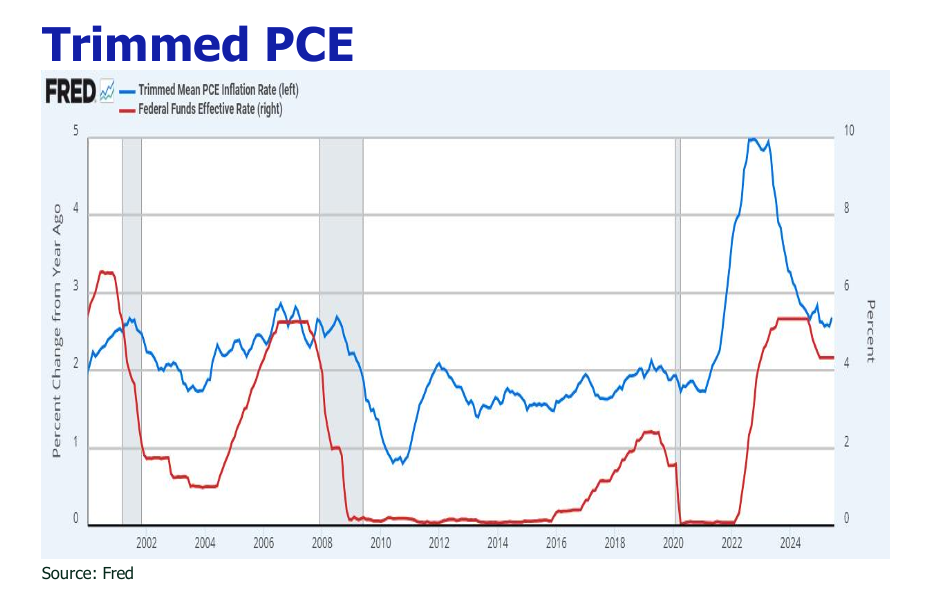
In light of these combined factors—weakening energy inflation, delayed tariffs, and a cooling labor market—we anticipate a Federal Reserve rate cut at the September FOMC meeting. This aligns with market pricing, which, according to the CME FedWatch Tool, currently implies an 87% probability of a 25 basis point reduction from the current 4.25%-4.50% target range.
Disclaimer
All information used in the publication of this report has been compiled from publicly available sources that are believed to be reliable, however we do not guarantee the accuracy or completeness of this report and have not sought for this information to be independently verified. Forward-looking information or statements in this report contain information that is based on assumptions, forecasts of future results, estimates of amounts not yet determinable, and therefore involve known and unknown risks, uncertainties and other factors which may cause the actual results to be materially different from current expectations.
We shall not be liable for any direct, indirect or consequential losses, loss of profits, damages, costs or expenses incurred or suffered by you arising out or in connection with the access to, use of or reliance on any information contained on this note.