
Tariff pressures and Iran-Israel tension cast a pall on the U.S. economic outlook

Austin Or, CFA

Highlights

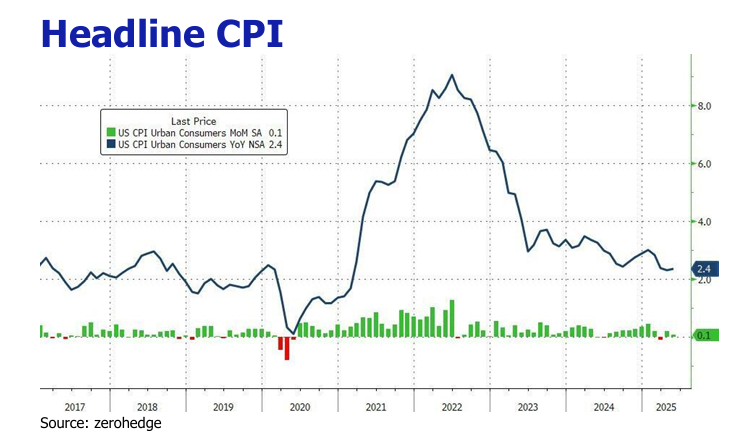
U.S. CPI edged up marginally to 2.4% YoY in May (from 2.3% in April), with MoM growth slowing to 0.1% (from 0.2%), as firms absorbed costs or drew down inventories amid demand uncertainty.

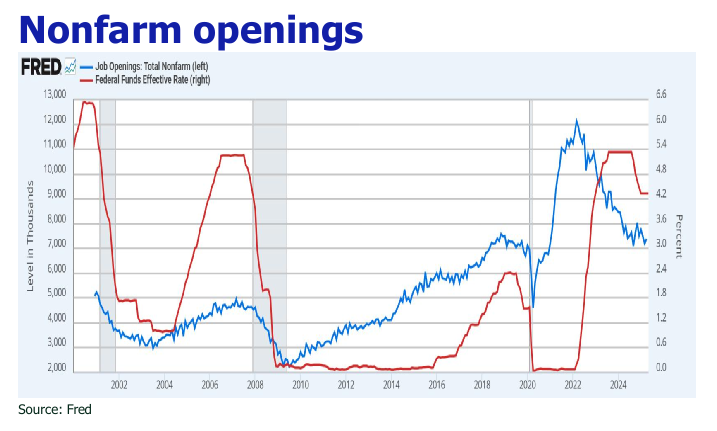
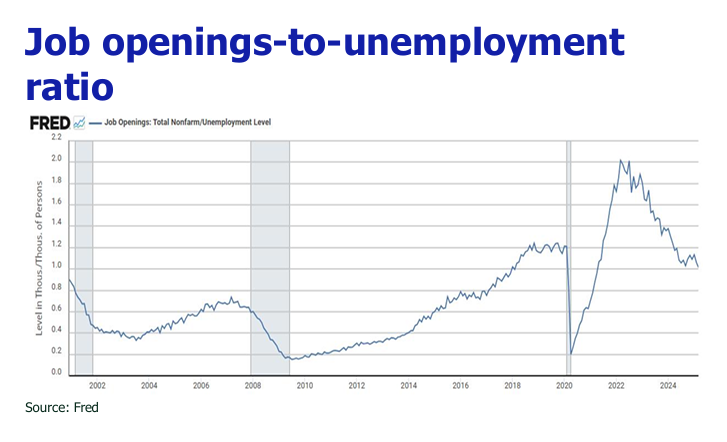
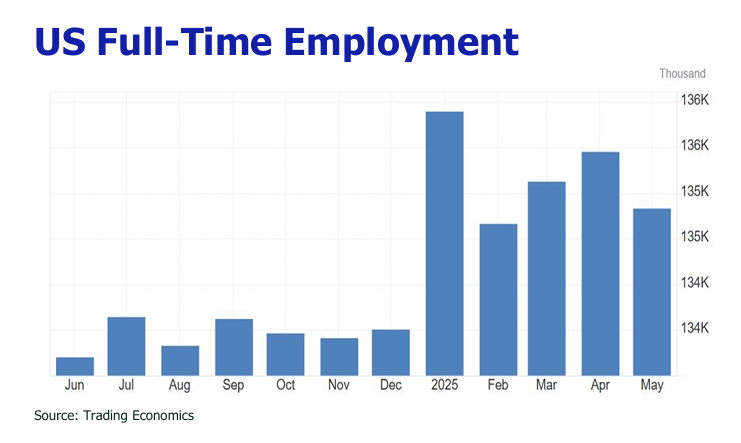
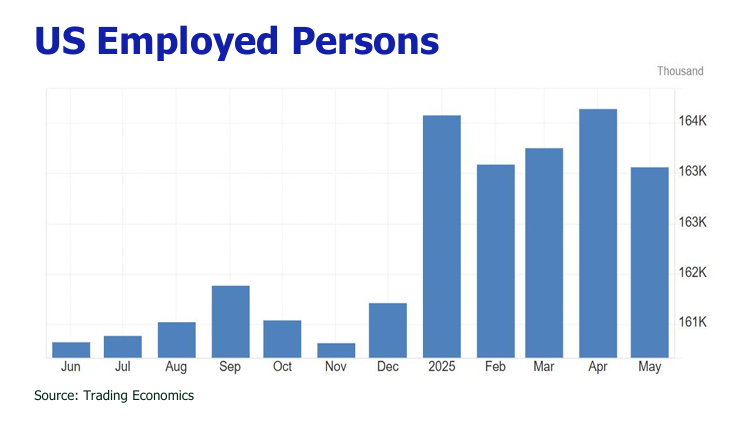
Despite a seemingly benign nonfarm payroll print, the household survey revealed a concerning contraction in employed workers, exacerbated by persistent federal job cuts (22,000 in May, 59,000 YTD) and mounting corporate layoffs as firms recalibrate for prolonged tariff strains.

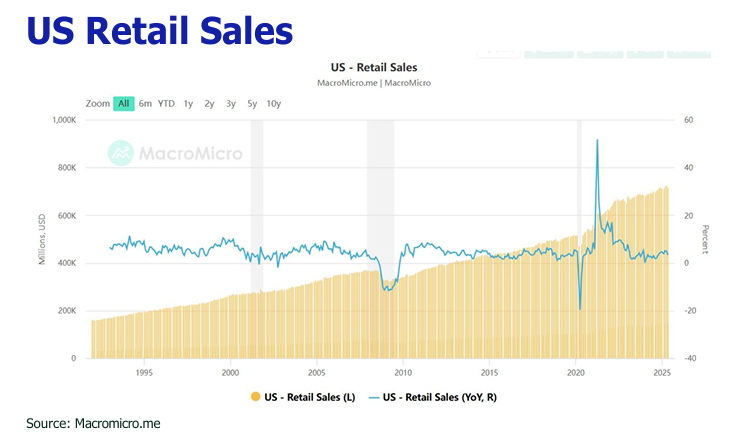
Retail sales declined 0.9% MoM in May (following a revised-0.1% in April), dragged lower by energy price deflation and fading pre-tariff spending momentum.

Crude surged ~15% in June on escalating Iran-Israel hostilities, Hormuz disruption risks, and potential Iranian supply curbs.

Gold—historically a wartime outperformer (e.g., +35–50% in 1973, +10–15% in 1990)—is poised for a further upside, bolstered by safe-haven demand, oil-driven inflation expectations, and USD depreciation.

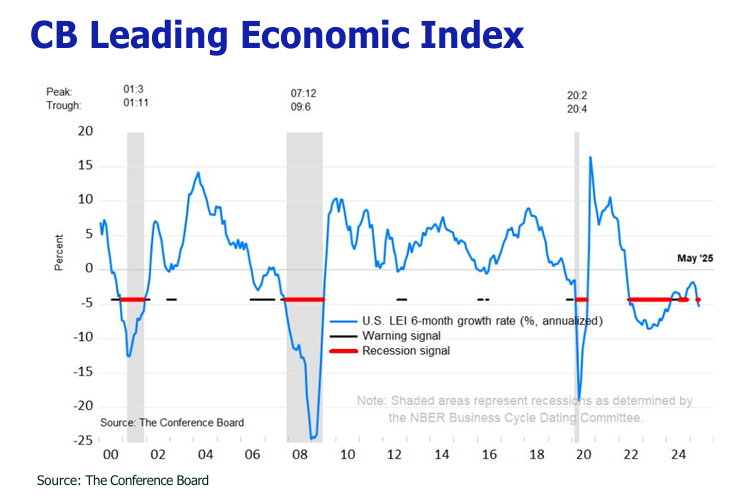
 July–August risks accentuated economic softness due to seasonal lethargy, tariff moratorium expiry (July 8 deadline), ebbing consumer resilience and cascading corporate layoffs and federal austerity.

The USD slumped 2.3% against the EUR and 1% on the DXY in June, with UBS forecasting a further 3.3% EUR appreciation and Morgan Stanley anticipating a 9% DXY plunge—consistent with our bearish verdict amid twin deficits, Fed rate cut dovishness, and global reserve diversification.

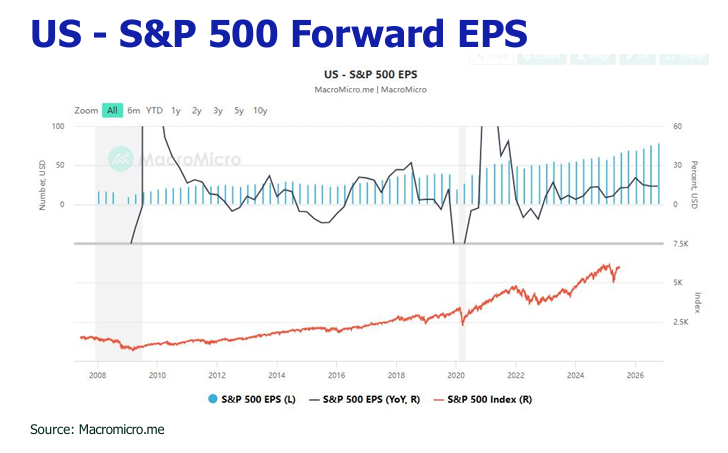
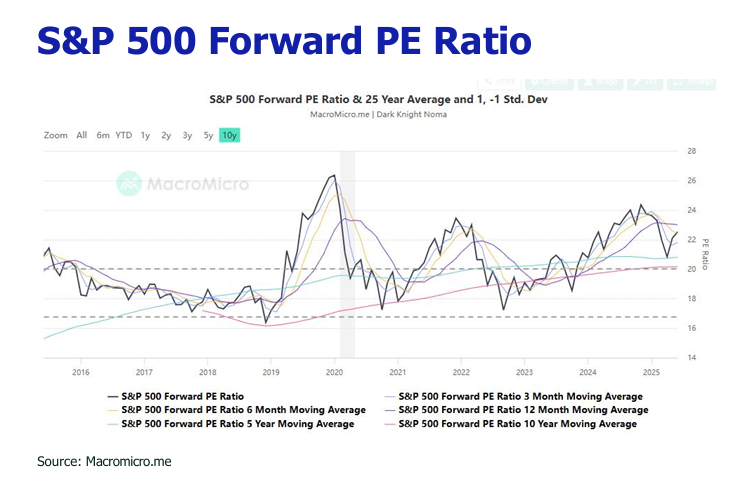
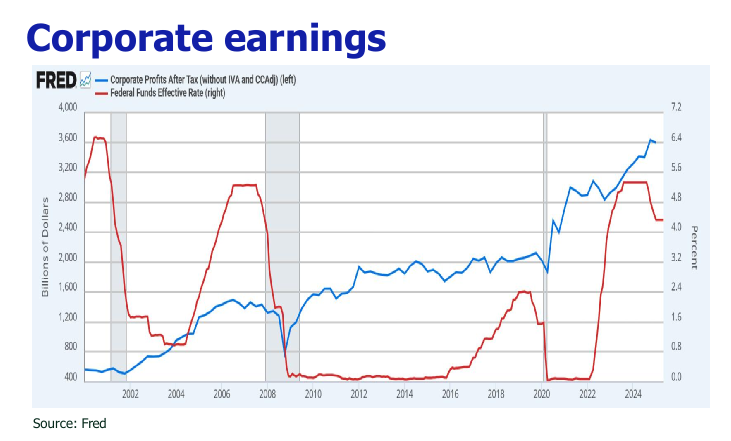
S&P500is projected to experience muted gains or range-bound performance in Q3 2025. While more pronounced tariff shocks (higher inflation, labor market strain and weaker consumption) and Middle East tensions drive risk-off sentiment, AI-driven earnings growth to tech stocks, potential tariff detente (EU, Japan negotiations), Trump’s pro-business policies and deregulation, as well as dovish Fed rate cut signals (one or two times in 2025) will provide the counterbalance.

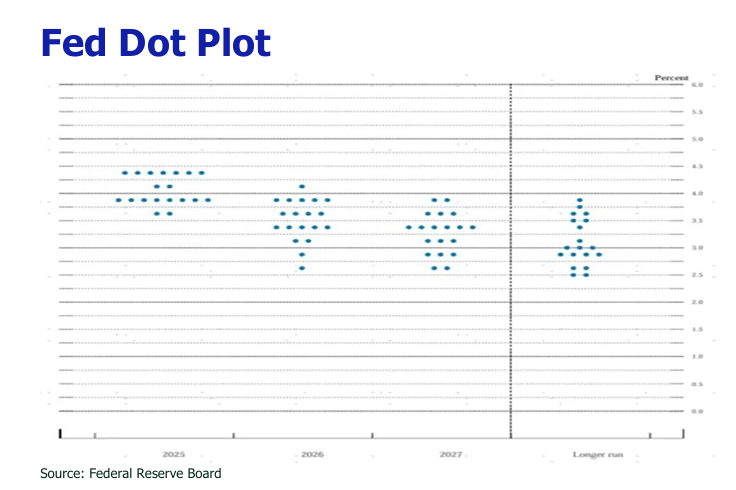
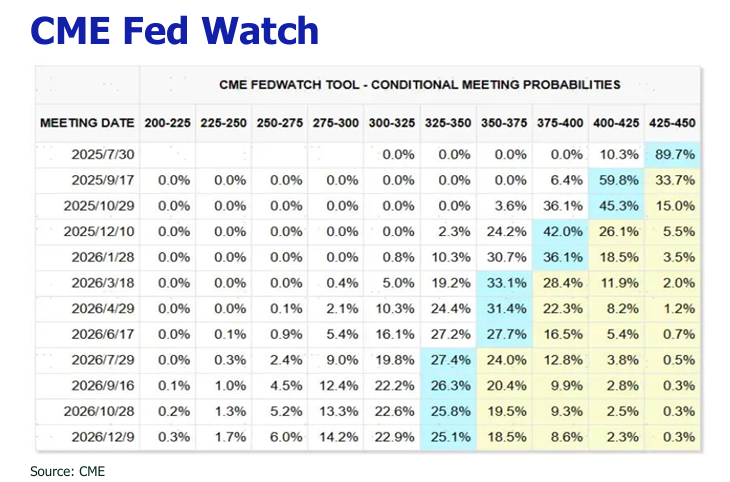
Fedwill stand pat for rate cut, adopting a cautious stance as it evaluates the economic impact of ongoing trade negotiations, particularly with the EU and China, through July and August.

InJune, the Hang Seng Index rose from 23,290 to approximately 24,200 points, driven by tech stock gains, the U.S.-China tariff truce, and post-ceasefire oil price declines with daily volume sustaining HK$200-300B.
Muted CPI uptick masks looming tariff pressures

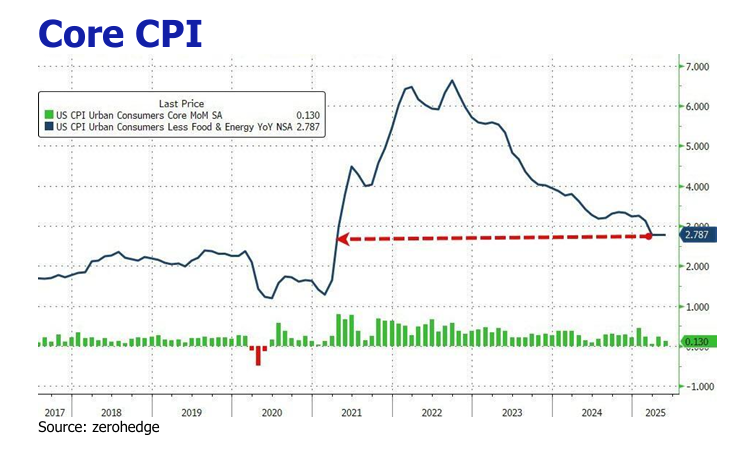
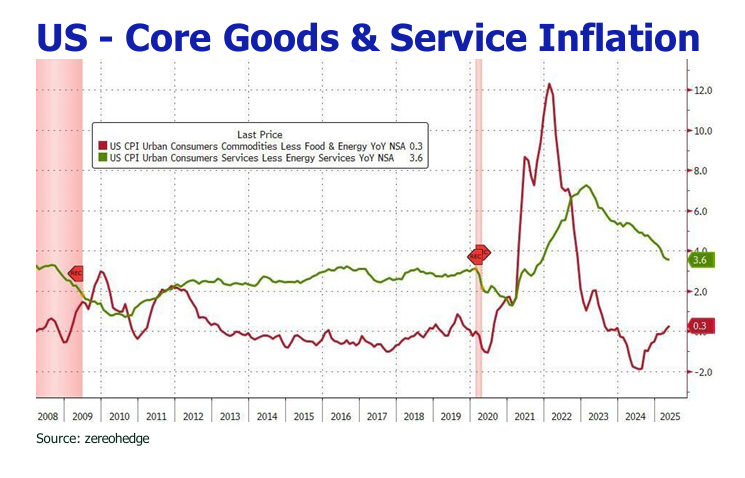
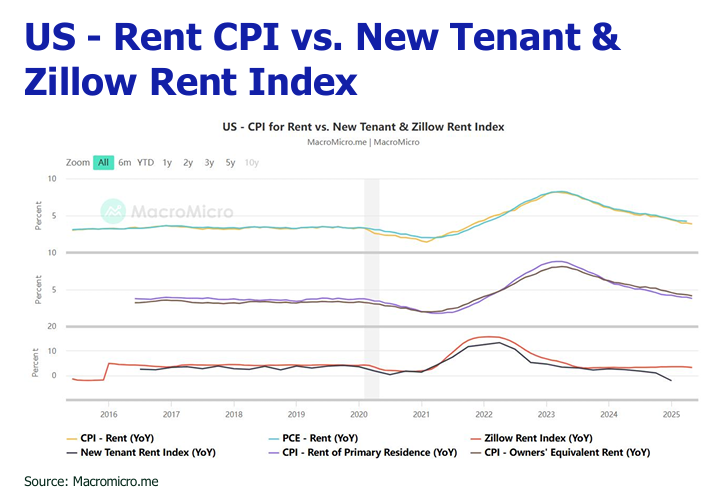
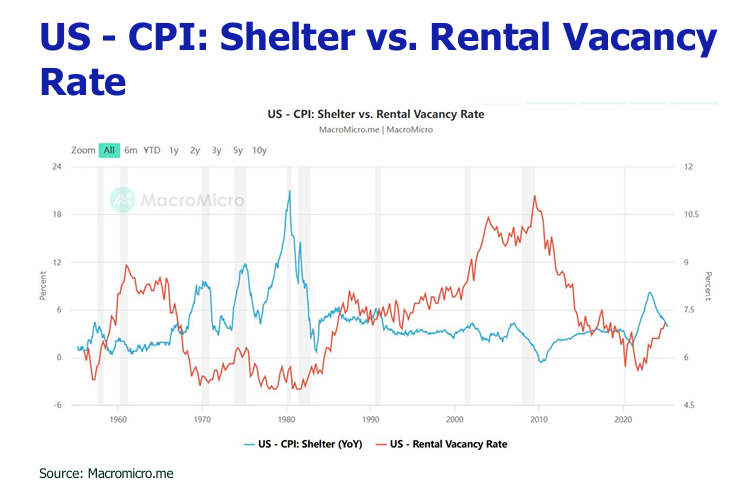
The U.S. Consumer Price Index (CPI) exhibited marginal year-over-year growth of 2.4% in May (up from 2.3% in April), with a month-over-month increase of merely 0.1% (down from 0.2%). Core CPI, excluding volatile food and energy components, held steady at 2.8% year-over-year, with a month-over-month rise of 0.1% (down from 0.2%). This attenuation in inflationary pressure stemmed primarily from decelerating prices in energy, vehicles, and apparel. Energy costs declined 1% month-over-month, new and used vehicle prices fell 0.3% and 0.5%, respectively, and apparel prices retreated 0.4%. Food and shelter prices, the latter being the predominant driver of the modest CPI uptick, each rose 0.3%.

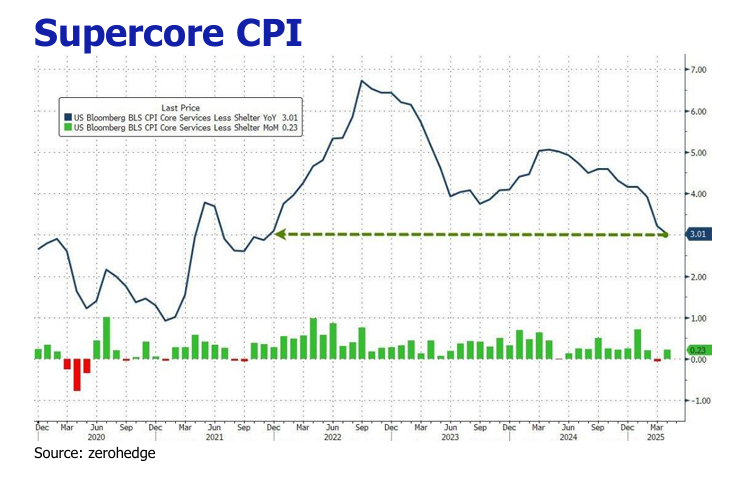
Conversely, tariff-sensitive categories exhibited pronounced price surges. Major household appliances soared 4.3%, and toy prices escalated 1.3%. However, these increases were insufficient to propel aggregate inflation, as core goods prices remained unchanged following a 0.1% gain in April. Services inflation, encompassing sectors such as healthcare, entertainment, and shelter, advanced modestly by 0.2% in May. The muted immediate impact of tariffs is attributable to the 90-day reciprocal tariff moratorium, effective until July 9, enabling firms to deplete existing inventories or absorb tariff-related costs through gradual price adjustments amid uncertain demand dynamics.

Labor market deterioration beneath surface optimism

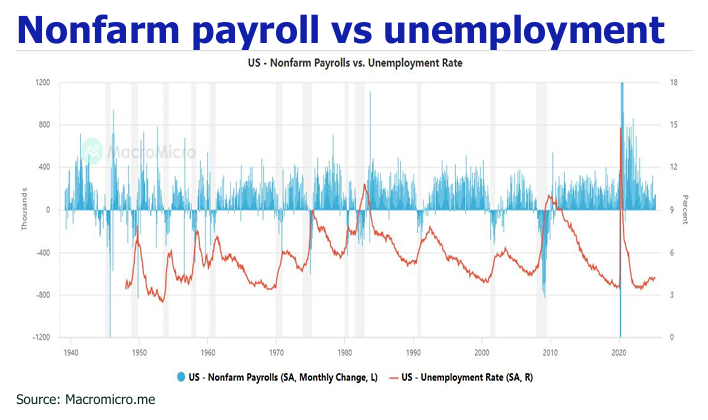
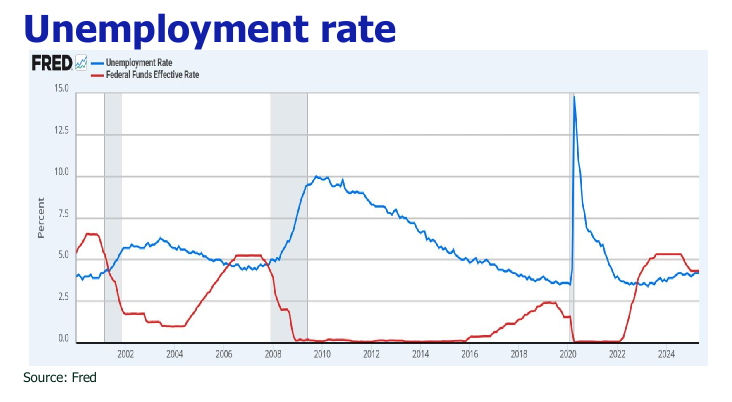
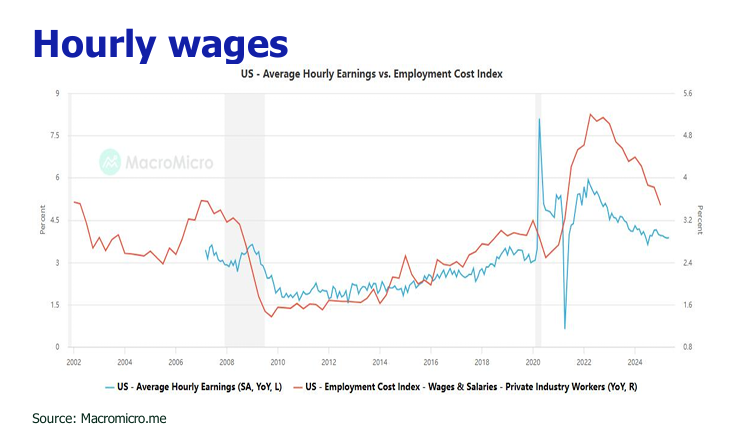
Nonfarm payrolls expanded by 139,000 in May, falling short of the downwardly revised 147,000 in April. This tempered growth was corroborated by a stable unemployment rate of 4.2% and sustained wage momentum, with average hourly earnings rising 0.4% month-over-month and 3.9% year-over-year. Nevertheless, several disquieting signals merit scrutiny. The household survey reported a stark 696,000 worker contraction, contrasting with the establishment survey’s positive payroll data. Federal government employment contracted by 22,000 jobs in May, contributing to a year-to-date reduction of 59,000.

Tariff-vulnerable sectors began to exhibit strain. Manufacturing shed 8,000 jobs, marking the steepest decline in 2025, while transportation and warehousing registered tepid growth after two consecutive months of contraction. The global outplacement firm Challenger, Gray & Christmas reported 93,816 announced job cuts in May, elevating the year-to-date total to 696,309—an 80% surge from the 385,859 cuts in the first five months of 2024. Confronted with tariff-induced operational pressures, layoffs have emerged as a prevalent strategy among U.S. corporations, with prominent firms such as Microsoft, Procter & Gamble, Walmart, and Amazon recently announcing workforce reductions.

Retail sales retreat amid waning pre-tariff surge

Retail sales contracted by 0.9% in May, following a revised 0.1% decline in April. This downturn was precipitated by plummeting oil prices and diminished demand for motor vehicles, building materials, and garden equipment post the pre-tariff import rush. Gasoline station receipts fell 2%, motor vehicle and parts retailers declined 3.5%, and building material and garden equipment sales dropped 2.7%. Nonetheless, robust wage growth underpinned pockets of consumer resilience. Core retail sales, excluding automobiles, gasoline, building materials, and food services, rose 0.4% in May, rebounding from a revised 0.1% decline in April.

Iran-Israel conflict inflicts oil price shocks and ripples to the US economy

Oil prices surged during the Iran-Israel tensions from June 13 to June 23, with Brent rising from $69 to $81.40 (+17%) and USO from $67.15 to $83.12 (+23.8%), driven by fears of supply disruptions through the Strait of Hormuz. The ceasefire on June 24 led to a sharp decline, with Brent falling to $67.14 (–17.5% from peak) and USO to $73.31 (–11.8% from peak).The ceasefire is likely to hold in the short term (1-3 months) due to economic exhaustion in both Iran and Israel, U.S. diplomatic pressure, and global interest in avoiding a regional war.However, the ceasefire’s long-term durability (beyond 3 months) is uncertain due to Iran’s potential to Iran’s nuclear ambitions, Israeli hawkishness, and proxy conflicts. If the ceasefire collapses, the U.S. economy could face higher oil inflation due to potential closure of the Strait of Hormuz and Iran’s oil output drop, supply chain disruption precipitated by intensified Houthi attacks in the Red Sea and worsened fiscal deficit following increased military spending.

Prediction

1.U.S. economic softness anticipated in July and August.

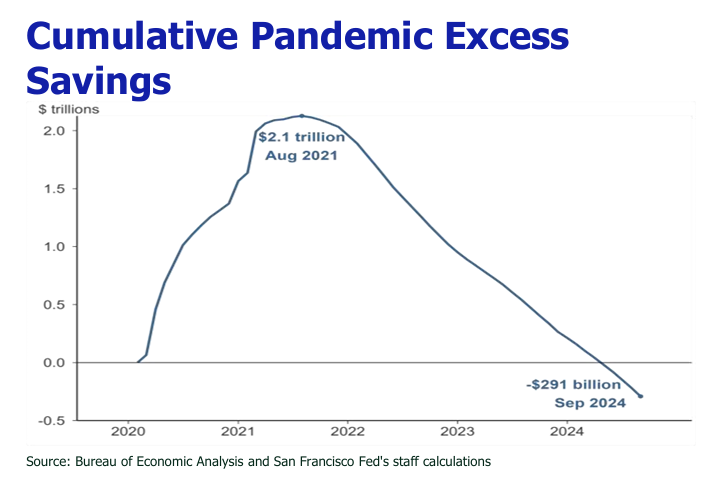
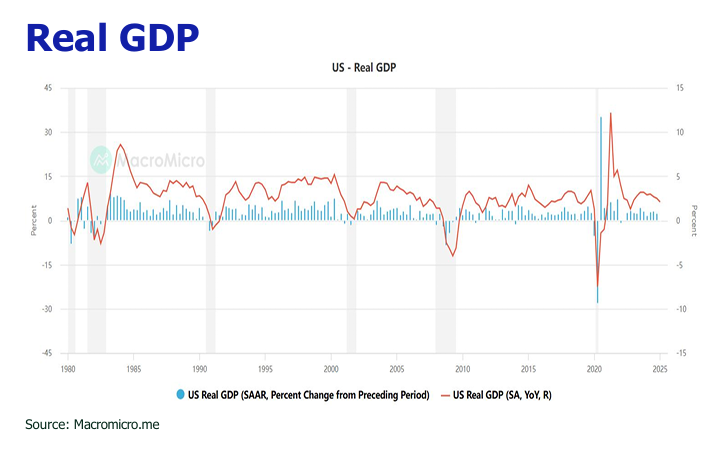
U.S. Q2 GDP is projected to rebound to a range of 0.8%–3.4% from a-0.2% contraction in Q1, bolstered by import normalization and consumer fortitude. However, economic activity is poised to exhibit renewed fragility in July and August, influenced by seasonal slowdowns in sectors such as education and construction, compounded by tariff related uncertainties. The 90-day tariff moratorium, set to expire on July 8, introduces substantial ambiguity. Should reciprocal tariffs (ranging from 11%–50%) be reinstated, they could exacerbate seasonal dips, amplifying inflationary and demand-side pressures. Consumer spending faces mounting headwinds, with a decelerating labor market, resumed student loan repayments for millions, and eroded household wealth amid tariff-induced equity market volatility. This precarious economic milieu, coupled with labor market softening, is likely to foster caution in discretionary expenditures, further hammering growth prospects.

2.Increased oil price spike risk and gold’s ascendancy traction.

The U.S. airstrikes on Iranian nuclear facilities (Fordow, Natanz, Isfahan) on June 22, have escalated tensions to a zenith, with Iran rejecting U.S. demands for “unconditional surrender” and reaffirming its nuclear ambitions. Iran’s potential retaliatory measures, should Israel persist with assaults, sustain a protracted risk premium in oil prices, driven by fears of Strait of Hormuz disruptions and curtailed Iranian oil exports (~1.7 million bpd). A durable ceasefire appears improbable without resolution of nuclear and regional issues, with a 60–70% probability of a transient truce and a 30–40% likelihood of rumbling through Q3 2025, in our view. Historical gold price performance during wartime (e.g., Yom Kippur War 1973: +30–50%; Gulf War 1990: +10–15%; Russia-Ukraine 2022: +15%) portends a bullish trajectory if the Iran-Israel conflict endures. Further upside of gold is plausible going forward, propelled by safe-haven demand, oil induced inflationary pressures, and U.S. dollar depreciation.

3. Inflation poised for acceleration in the latter half of 2025.

As Trump’s tariff regime takes effect, enterprises will progressively deplete accumulated inventories, potentially transferring tariff costs to consumers. This dynamic augurs an upsurge in core goods inflation. We anticipate a discernible escalation in U.S. CPI through the second half of 2025, particularly if the 90-day reciprocal tariff moratorium concludes on July 9 without trade agreements or extensions. In such a scenario, tariffs on goods from multiple economies could surge, with rates on EU products potentially reaching 50%.

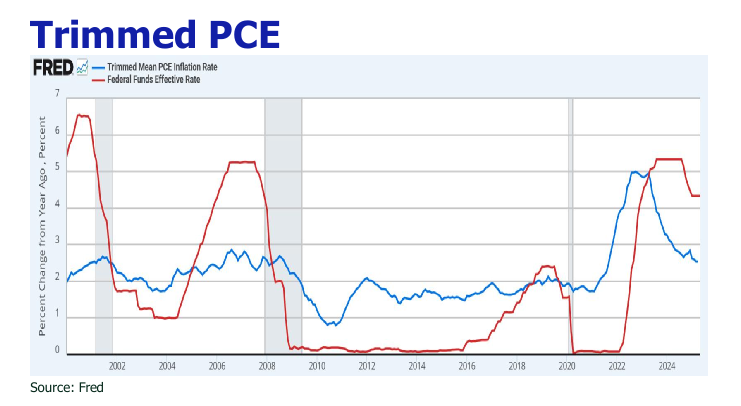
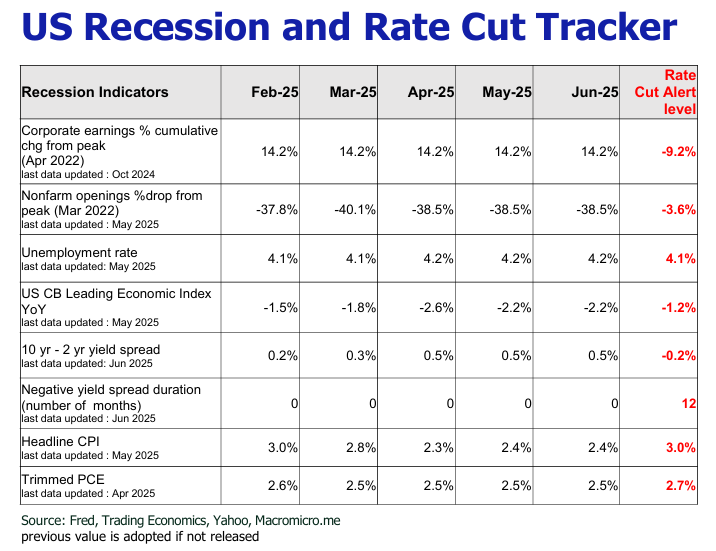
U.S. inflation is further susceptible to reverberations from the recent oil price surge. In a Iran-Israel conflict resurgence scenario with oil prices rallying to $75–$85, a $10 per barrel increase in Brent crude typically elevates U.S. gasoline prices by ~25–30 cents per gallon, adding 0.1–0.2 percentage points to headline CPI over 1–3 months, given energy’s ~7% weight in CPI (Federal Reserve estimates). In a severe scenario, with oil prices spiking to $90–$120 due to partial Strait of Hormuz closures or further strikes on Iranian oil infrastructure, global supply disruptions (~5–10 million bpd) could halt Iranian exports, precipitating a CPI rise to 3.0–3.2%. The Federal Reserve’s latest projections revise core PCE upward to 3% by year-end (from 2.7%), compared to 2.5% in April, underscoring the higher inflation vulnerability.

4. Intensifying labor market strain from tariffs and DOGE initiatives.

Tariffs, federal funding reductions, subdued consumer spending, and pervasive economic pessimism are exerting acute pressure on corporate work forces. Firms are curtailing expenditures, decelerating recruitment, and issuing layoff notices. Persistent corporate retrenchments (e.g., over 170 firms in June) and federal workforce reductions (~281,452 DOGE-related) will elevate unemployment. Reciprocal tariff reimposition could accelerate layoffs in manufacturing, retail, and logistics, while government expenditure cuts portend increasingly adverse labor market reports. The Budget Lab at Yale projects a 0.4 percentage point rise in unemployment to 4.6% by year-end, with 590,000 fewer jobs, aligning with the Federal Reserve’s forecast of 4.5% unemployment.

5. U.S. dollar is at the on-ramp of precipitous debasement.

Year-to-date, the U.S. dollar index has plummeted nearly 10% against major currencies, exacerbated by burgeoning U.S. deficits, persistent tariff ambiguities, and anchored expectations of Federal Reserve rate cuts. Our prior prognosis of continued USD depreciation has been validated, with a 2.3% slide against the euro and a 1% drop in the DXY in June. Goldman Sachs has revised its GBP/USD targets upward to 1.40 in six months (from 1.35) and 1.44 in twelve months (from 1.39). UBS Wealth Management’s CIO forecasts EUR/USD at 1.20 by June 2026, while Morgan Stanley anticipates a further 9% DXY depreciation over the next 12 months. Among the central banks surveyed by the Official Monetary and Financial Institutions Forum (OMFIF), a net 16% of respondents indicated plans to increase their holdings of euros in the next 12 to 24 months, making it the most sought-after currency, up from 7% a year ago, followed closely by the yuan. HSBC and UBS assert that it is realistically feasible for the euro to reach a 25% share (up from 20%) of global foreign exchange reserves within 2 to 3 years.

6. Fed on hold for rate cut, awaiting clarity on tariff deals in July (EU and other nations) and August (China).

Successful deals that maintain or lower tariffs (e.g., EU at 10% or below, China at 30% or lower) could reduce inflationary pressures and stabilize markets, increasing the likelihood of earlier rate cuts in 2H if EU talks succeed or August if China follows suit (hinted by Powell as well). However, failed negotiations leading to higher tariffs (50% for EU, 34% or more for China) could exacerbate inflation and economic uncertainty, likely delaying rate cuts until the Fed gains clarity on price and growth impacts, possibly into 2026.

Disclaimer

All information used in the publication of this report has been compiled from publicly available sources that are believed to be reliable, however we do not guarantee the accuracy or completeness of this report and have not sought for this information to be independently verified. Forward-looking information or statements in this report contain information that is based on assumptions, forecasts of future results, estimates of amounts not yet determinable, and therefore involve known and unknown risks, uncertainties and other factors which may cause the actual results to be materially different from current expectations.

We shall not be liable for any direct, indirect or consequential losses, loss of profits, damages, costs or expenses incurred or suffered by you arising out or in connection with the access to, use of or reliance on any information contained on this note.