Ceasefire, blockade, and AI heat drive epic reversal of equities and commodities

Austin Or, CFA

Highlights

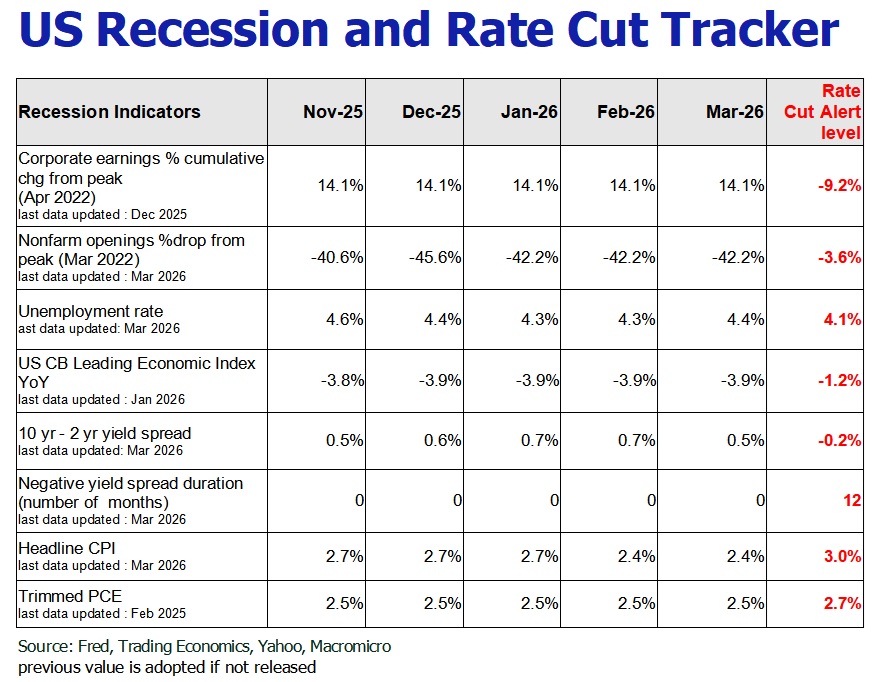
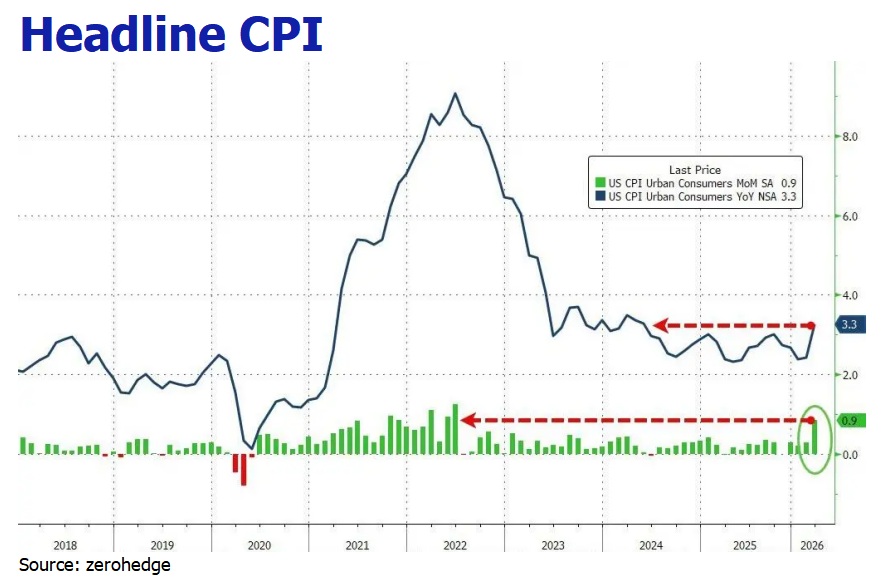
 Inflation accelerated in March, with the CPI rising 3.3% year-over-year and 0.3% month-over-monthfanned by higher energy prices from the closure of the Strait of Hormuz.

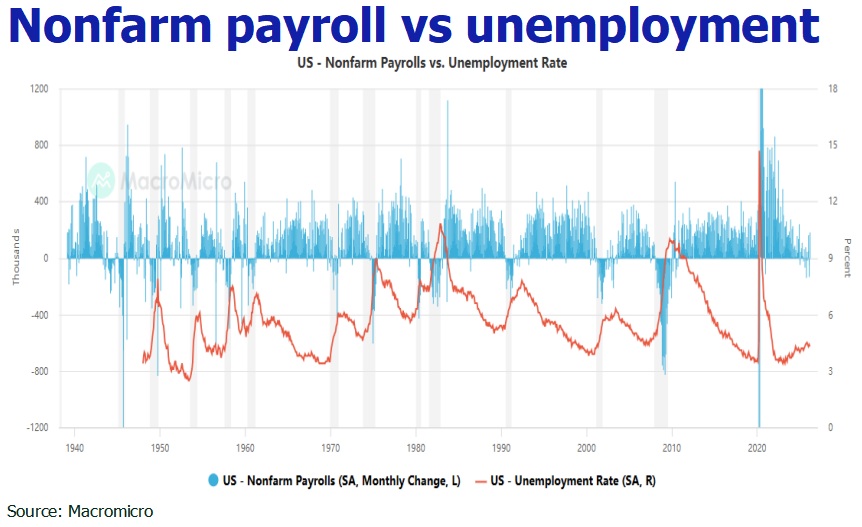
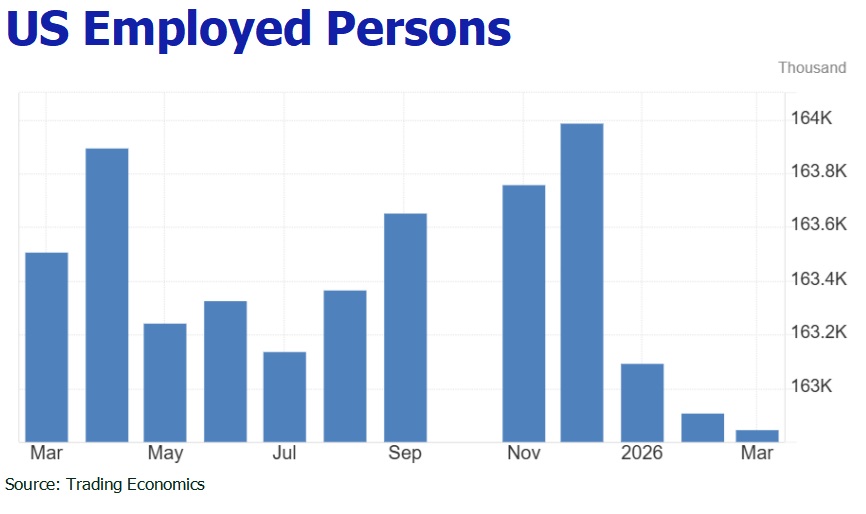
 Nonfarm payrolladded 178,000 jobs in March, recovering from a 133,000 decline in February.   Oil prices exhibit heavy swing amidceasefire and the strait blockade. 

  Gold prices climbed from roughly $4,650 to a cap of $4,800, under the mixed dynamics of oil prices and the US dollar, reacting to shifting interest rate cut expectations. 

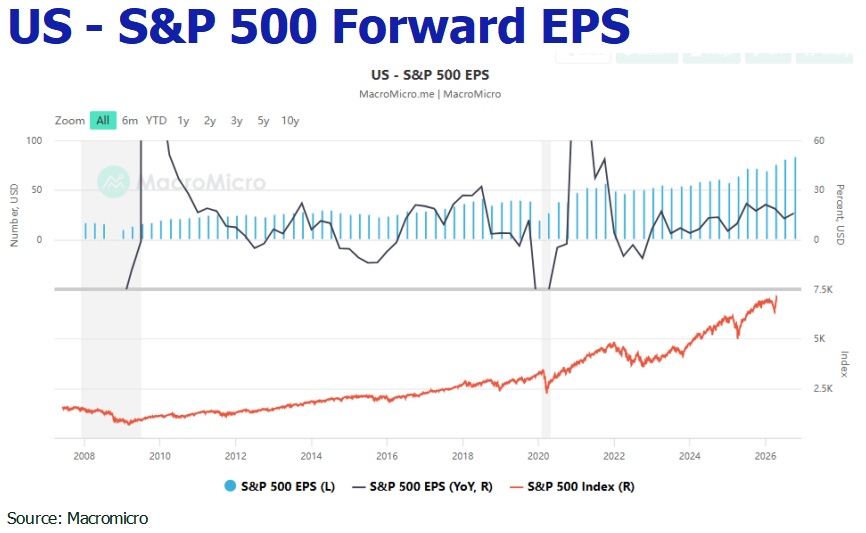
  US stock market hits all-time highs, celebrated by truce extension, hopes for a lasting deal, and a resurgence of the “AI bull” narrative.

  Inflation is predicted to rise in May due to the lagged secondary effects of high oil prices (typically 2-3 months). 

  A diplomatic deal between US and Iran is likely deadlocked in the short term due to irreconcilable demands (nuclear issues, proxy funding, sanctions relief, lifting of US navy blockade), and hardened positions of both sides to seek negotiation advantages. 

  Oilprices are expected to be elevated (Brent $106) and unstable; a prolonged blockade could push prices toward $150. 

  Goldis meant to remain range-bound ($4,500–$4,850) as safe-haven demand battles against inflation and rate hike fears. 

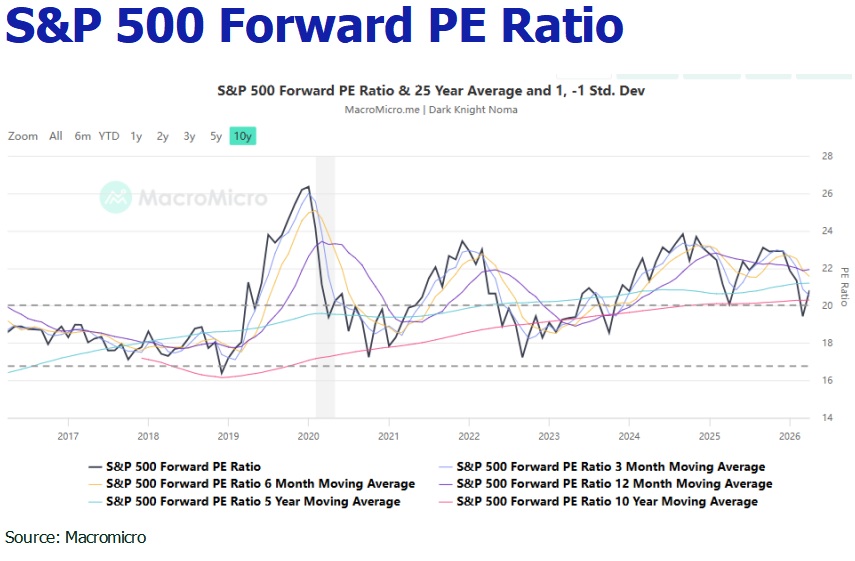
  The bull vibe for equitiespropelled by strong corporat earnings and AI could dash if high oil prices trigger stagflation and rate hikes. 

  The Hang Seng Index rallied 6% to reclaim 26000 driven by US-Iran war deescalation, with daily turnover sustaining HK$200-400 billion.

Inflation surges on energy shock, core remains steady
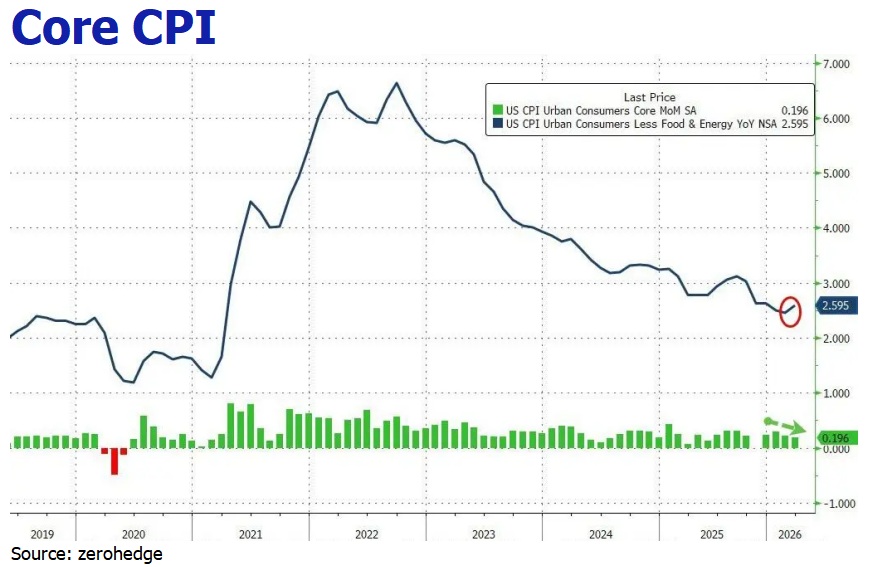
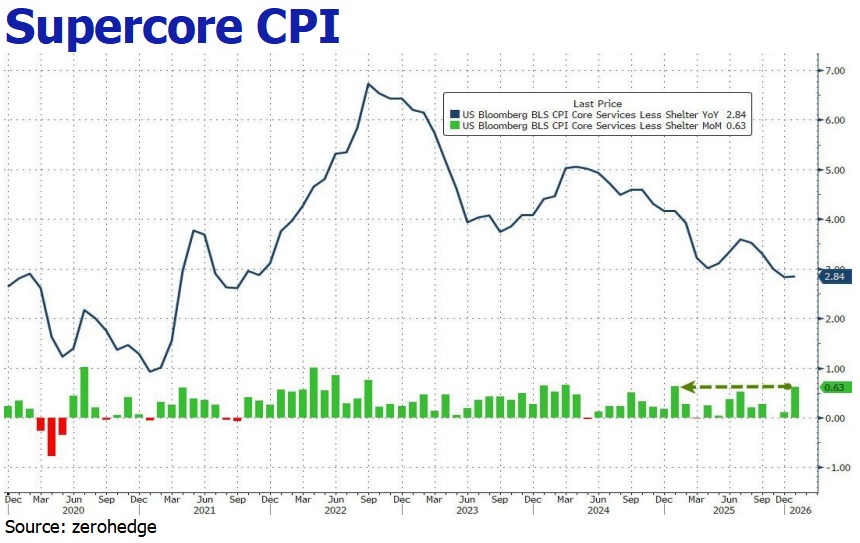
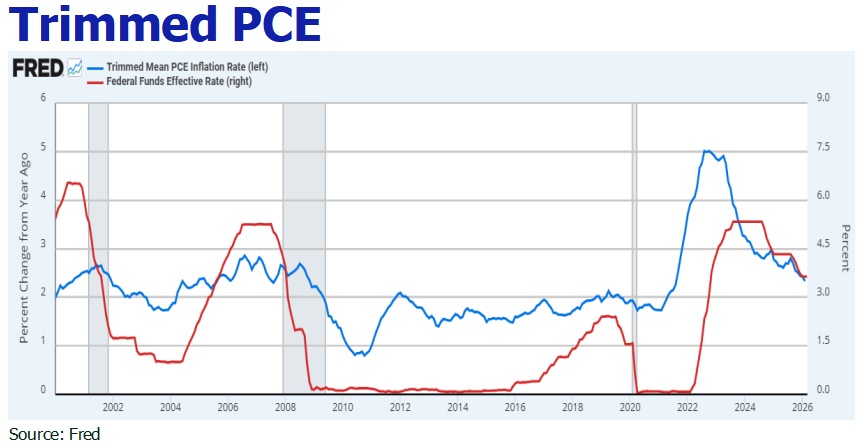
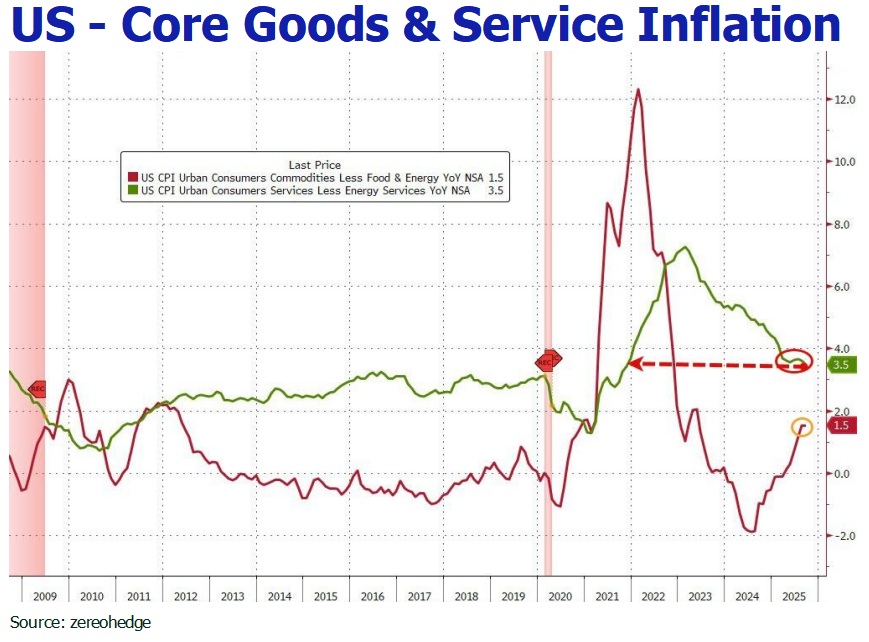
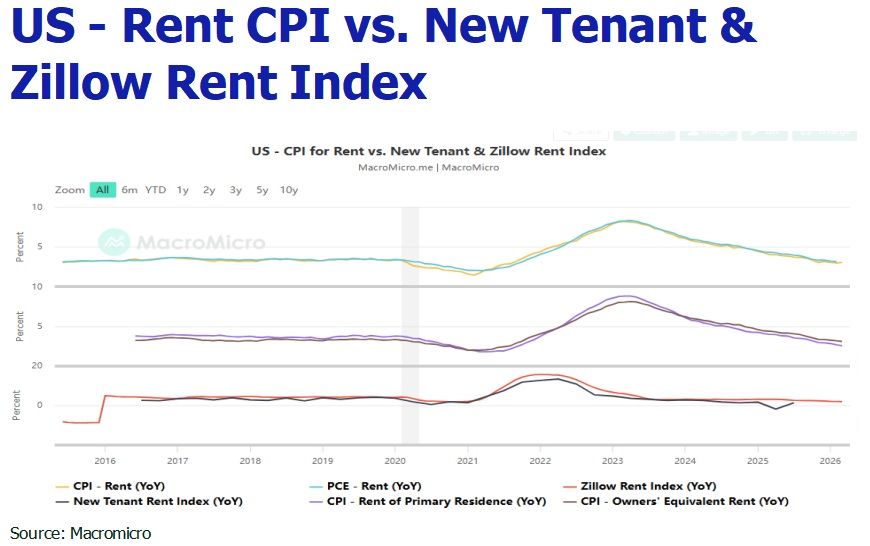
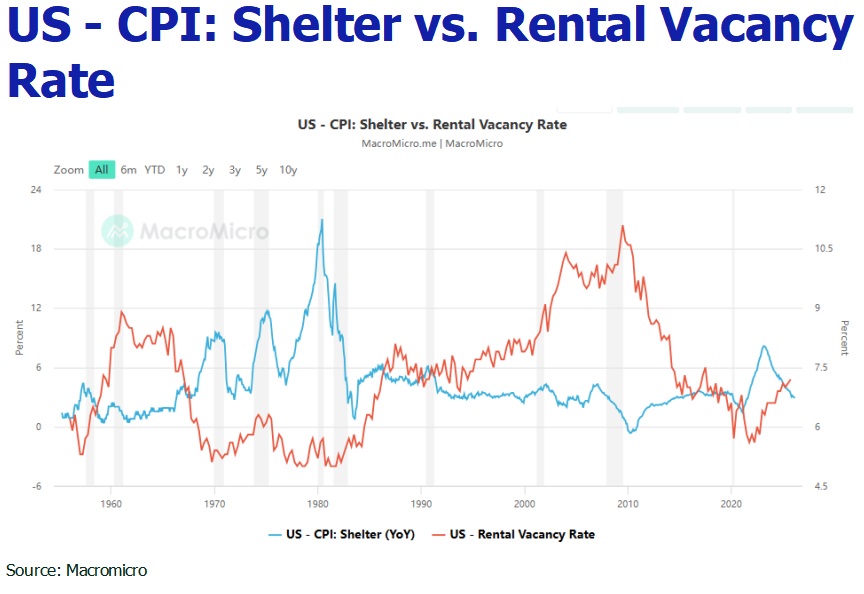
Inflation accelerated in March, with the Consumer Price Index (CPI) rising 3.3% year-over-year, up from 2.4% in February. Monthly gains came in at 0.3%. The surge was primarily driven by energy costs: gasoline soared 21.2%, while fuel oil prices jumped 30.7% month-over-month, accounting for nearly three-quarters of the monthly increase following the closure of the Strait of Hormuz. Core inflation remained steady, increasing 2.6% year-over-year and 0.2% month-over-month, compared to 2.5% and 0.2% in February. Key drivers included airline fares (+2.7%) and apparel (+1%). Shelter costs rose 0.3% monthly and 3% annually, indicating that service inflation remains relatively tame outside of tariff impacts and war-related pressures. Food prices proved immune to higher energy costs for the month, rising 2.7% annually, while the “food at home” index actually fell by 0.2%.

Nonfarm payrolls rebound, unemployment edges down
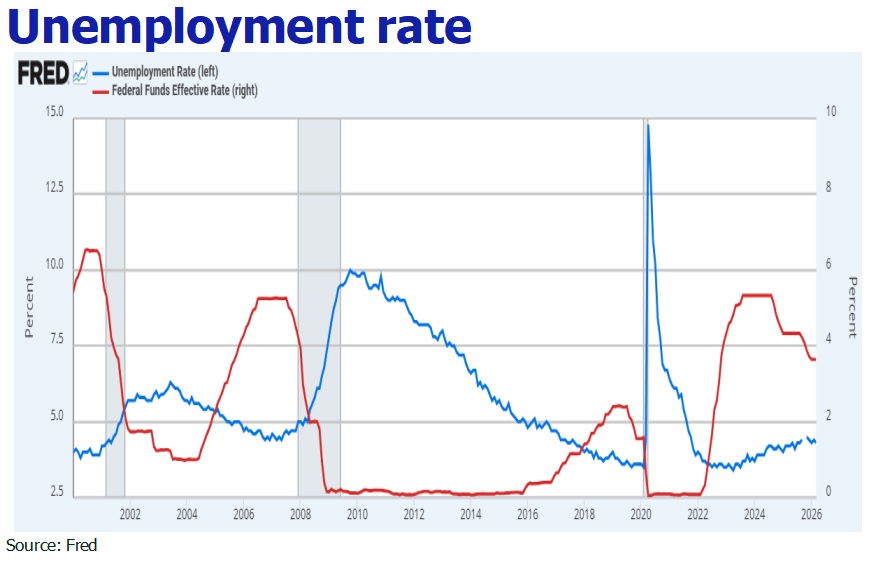
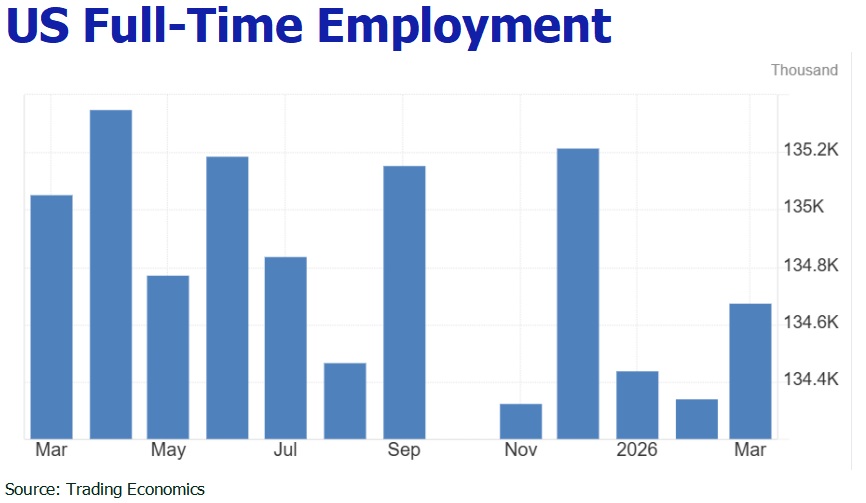
Nonfarm payrolls rose by a seasonally adjusted 178,000 in March, a sharp reversal from the 133,000 decline seen in February. This recovery was largely driven by the resolution of strikes and the dissipation of severe winter weather that had suppressed employment in the prior month. The return to work in education and healthcare added 91,000 jobs, serving as the core driver of March’s gains. Additionally, offline service sectors saw a bounce-back, with construction adding 26,000 jobs and leisure and hospitality adding 44,000, reflecting a rebound in previously suppressed demand. The unemployment rate edged lower to 4.3%, though this decline was supported by a shrinking labor force participation rate rather than being solely attributable to strong employment demand.
Oil Market: roller-coaster as ceasefire hopes collide with supply shock fears
After hitting post-conflict highs in late March (Brent: $112.57/bbl), oil prices corrected sharply in mid-April to $90.38. This dip followed a US-Iran ceasefire agreement effective through April 21 and Iran’s temporary concession to ease the blockade on the Strait. However, tensions reignited when the US Navy blocked Iranian ship passage, enraging Iran to re-tighten its grip on the Strait. Consequently, Brent crude rebounded to over $106.

Gold price rally, exhibiting negative correlation with oil and US dollar
Gold traded higher from late March, rising from $4,650 to a ceiling near $4,800, driven by safe-haven demand amid ongoing Middle East conflict, rising inflationary fears, and US-Iran geopolitical tensions. Gold’s movements have been strongly dictated by oil prices and the US dollar, responding to shifts in inflation expectations and the outlook for rate cuts. When oil fell in early to mid-April, easing inflation pressures, gold edged up as hopes for a rate cut resumption were rekindled. Yet when geopolitical risks spike and oil prices shoot higher again, gold tends to bend under pressure: the “higher for longer” rate narrative returns, and the US dollar strengthens on its safe-haven appeal, both headwinds for the non-yielding metal.

US stock market hits all-time highs driven by ceasefire and AI frenzy
Following the temporary two-week ceasefire between the US and Iran, the S&P 500 surged past 7,000 for the first time, gaining more than 10% in just 11 trading days. After the 20-day truce expired on April 21, the decision to extend the ceasefire—pending Iran’s submission of a proposal to end the war—boosted market confidence that a lasting truce is reachable. With the de-escalation of the conflict, the market refocused on the AI investment mania, catalyzed by a boom in AI agents which are capable of performing multi-step tasks. The investment focus is shifting from advanced chips (GPUs) to the broader physical ecosystem—general-purpose computing, memory, power, and cooling—as AI transitions from an era of “training” models to one of “inference” and execution.

Prediction

1.Inflation continues to creep up in May 

Despite the significant pullback in oil prices during April, we predict US inflation will mount in May due to secondary transmission effects. Generally, oil prices affect consumer inflation with a lag of two to three months as higher energy costs ripple through the supply chain. Once inflation passes through the initial layer of gasoline, jet fuel, and diesel, it impacts airline fares, transportation costs, and shipping surcharges. Eventually, these costs filter into fertilizer and plastics, and finally, food prices.


2.A prolonged period of US-Iran tension

A US-Iran deal is likely to remain deadlocked in the short run due to several irreconcilable disagreements, including demands for nuclear abandonment, a halt to funding for regional groups like Hamas and Hezbollah, guarantees against future attacks from the US, and Iranian demands for sanctions relief and access to frozen assets.

The US naval blockade—and Iran’s resumed closure of the Strait—have further hardened positions, as both sides seek economic leverage to secure a deal favorable to their interests. Iran has publicly insisted that President Trump lift the blockade on ships entering or exiting Iranian ports in the Strait before Tehran will engage in new talks. Trump has resisted this demand, insisting a final deal must come first.

We believe the US has signaled a strong reluctance to escalate military action in response to threatened missile attacks on Gulf oil facilities. Instead, Washington is resorting to intercepting Iranian oil exports as a lever to pressure Tehran back to the table.

However, Iran will not simply submit to US terms, as the regime views capitulation as an existential threat. If the US blocks its oil exports and Iran feels economically suffocated, it can fight back through multiple channels: smuggling oil via land routes and ghost tankers, threatening to mine the Strait of Hormuz, and launching proxy warfare through the Houthis, Syria, and Hezbollah. By threatening global energy supplies and regional stability through its proxies while simultaneously building economic resilience and opening diplomatic backchannels, Tehran aims to make any confrontation or continued economic strangulation so costly, protracted, and disruptive that the US is ultimately compelled to seek a diplomatic solution on more favorable terms.


3.Oil, gold, and equities to stay volatile

Oil: Prices are elevated and unstable, with Brent at $106/bbl and WTI at $96/bbl. The closure of the Strait of Hormuz, which previously handled roughly 20 million barrels per day, continues to tighten supply. If the blockade persists, prices could challenge $150 per barrel. Any headline regarding diplomatic progress or military escalation is likely to trigger sharp swings.

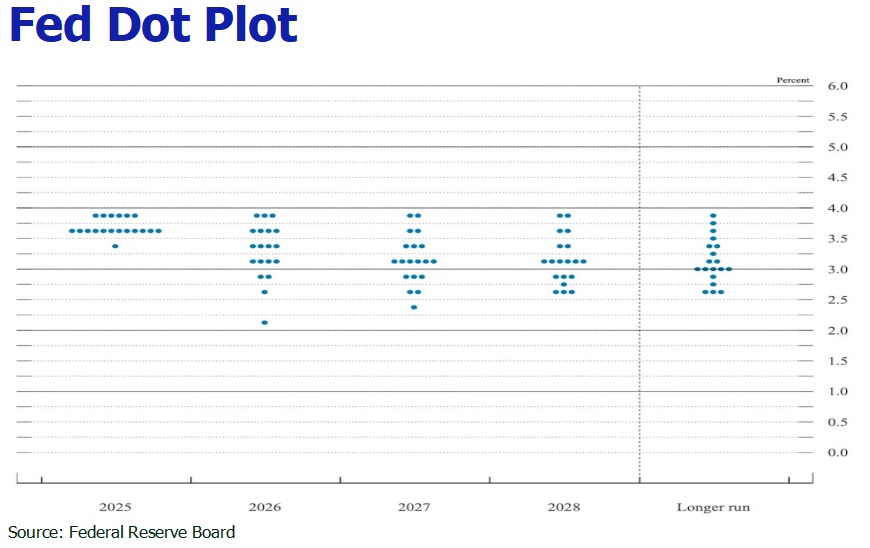
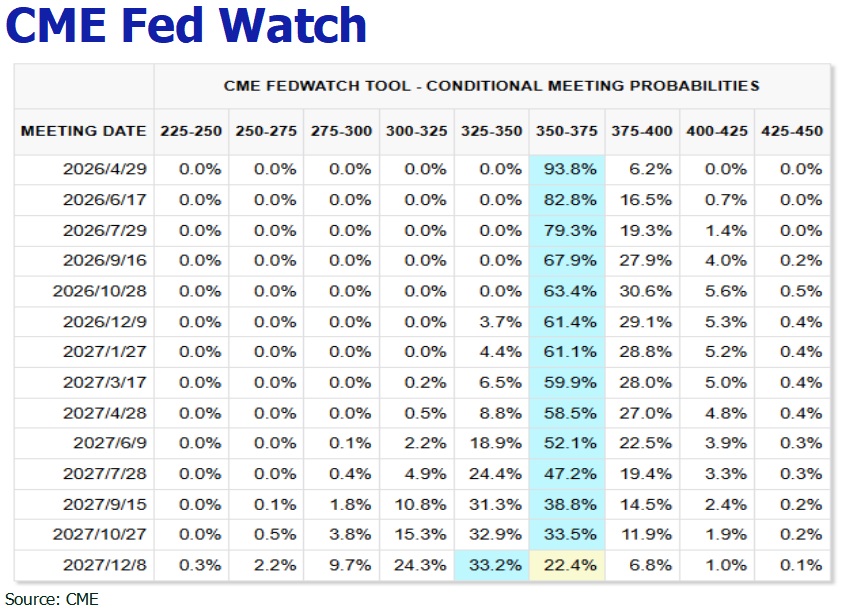
Gold: Volatility is being driven by a paradoxical environment. While geopolitical crises typically boost safe-haven demand, the oil shock has intensified inflation fears, leading markets to price in potential rate hikes rather than cuts. This creates a headwind for non-yielding gold. We expect gold prices to remain range-bound (roughly $4,500–$4,850) until credible prospects for peace emerge.

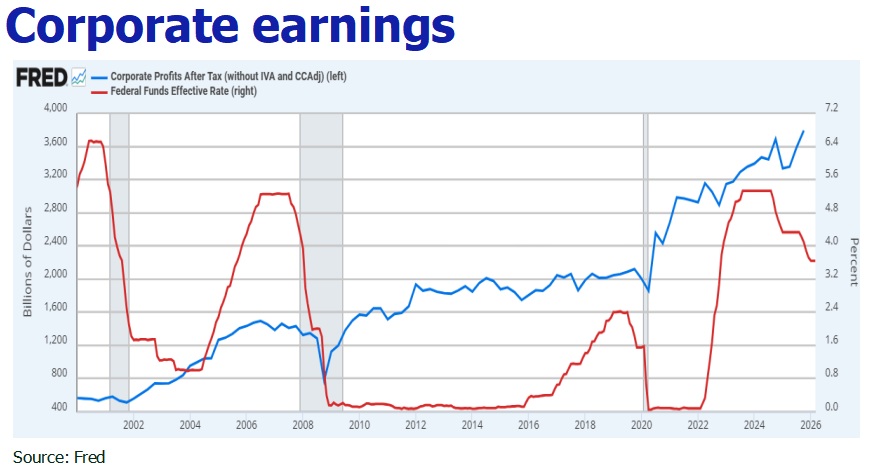
Equities: The market is currently buoyed by resilient Q1 corporate earnings and intense AI enthusiasm. However, a failure to reach a new US-Iran deal and a prolonged closure of the Strait of Hormuz would drive oil prices higher. This could spark stagflation—reigniting rate hike risks, deterring economic growth, and weighing heavily on equity valuations.


Disclaimer

All information used in the publication of this newsletter has been compiled from publicly available sources that are believed to be reliable, however, we do not guarantee the accuracy or completeness of this report and have not sought for this information to be independently verified. Forward-looking information or statements in this report contain information based on assumptions, forecasts of future results, and estimates of amounts not yet determinable, and therefore involve known and unknown risks, uncertainties, and other factors that may cause the actual results to be materially different from current expectations.

We shall not be liable for any direct, indirect, or consequential losses, loss of profits, damages, costs, or expenses incurred or suffered by you arising out or in connection with the access to, use of, or reliance on any information contained on this note.