

Resilient inflation, robust employment, and a Hawkish Fed pivot
Highlights
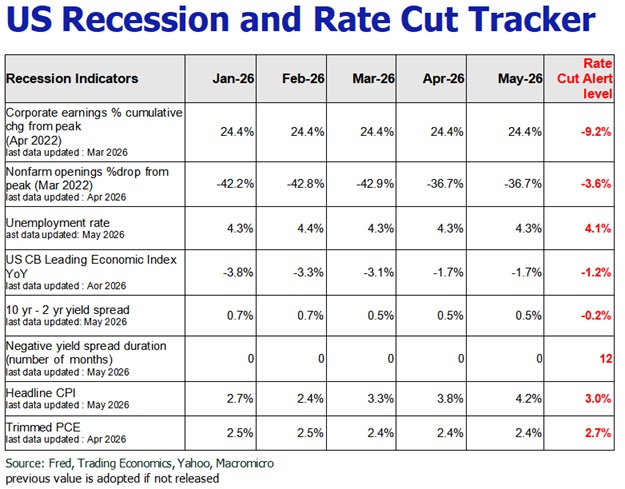
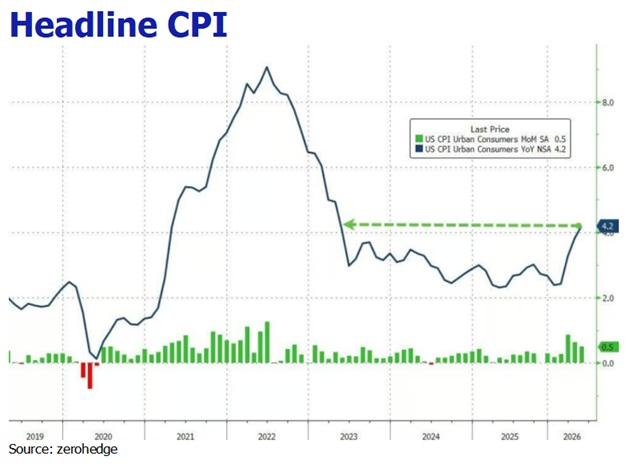
- May CPI rose 0.5% month-over-month, pushing annual inflation to 4.2% — the highest since April 2023 — driven overwhelmingly by energy prices.
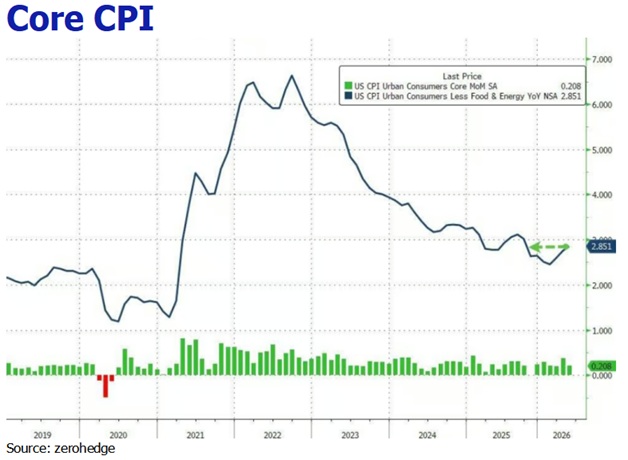
- Core CPI showed signs of cooling, rising only 0.2% month-over-month and 2.9% year-over-year, with slower gains in shelter and food, alongside declines in transportation services and new vehicles, reflecting weak consumer demand.
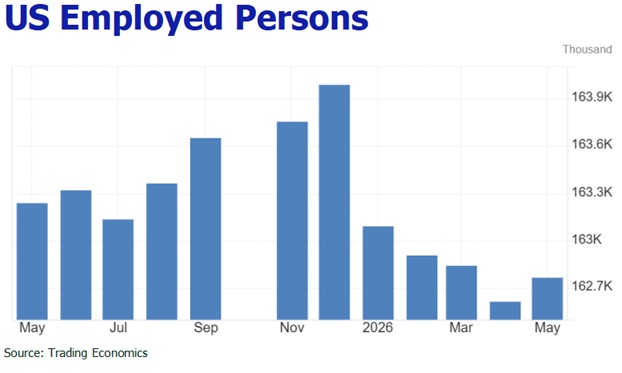
- US nonfarm payrolls added a robust 172,000 jobs in May, beating expectations, with strong gains in leisure & hospitality (boosted by the World Cup) and healthcare.
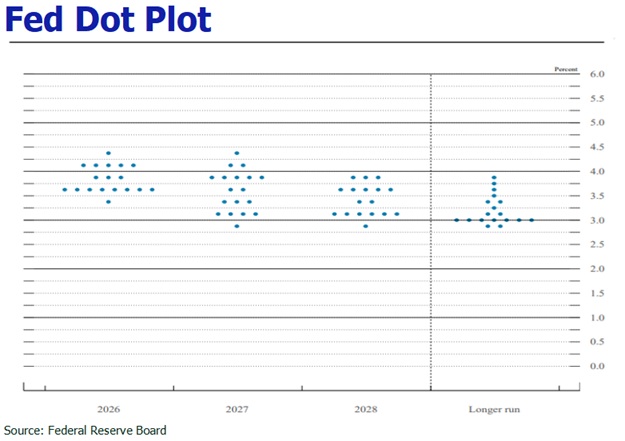
- At its June meeting under new Chair Kevin Warsh, the Fed delivered a hawkish surprise by signaling that nine officials now expect at least one rate hike this year.
- Oil prices plunged over 22% in June to $70–$75 range after the US and Iran reached a 60-day ceasefire agreement, reopening the Strait of Hormuz and restoring Iranian exports.
- Gold extended its decline in June, falling over 10% below $4,000/oz, as rising bond yields, official sector selling (e.g., Turkey), and profit-taking by speculative funds — who rotated into IPOs like SpaceX, Anthropic, and OpenAI — weighed heavily on the metal.
- Despite falling oil prices, inflation is expected to remain elevated in the short run due to delayed pass-through effects, lingering high-cost inventories, slow supply chain normalization, and temporary upward pressure from the 2026 World Cup.
- A prolonged rate pause remains the base case, though a collapse in US-Iran talks could trigger renewed oil spikes and force the Fed to reconsider hikes.
- Cratering nearly 10% to the 23,000, the Hang Seng Index saw average daily turnover shriveled 20% to a HK$236 billion, precipitated by reverberating fears of US rate hikes, dismal earnings outlook reflecting slack Chinese consumer demand, and preemptive selling front-running the looming July deluge of IPO lock-up expiries.
The third straight month of strong increases in the CPI
Marking the third consecutive month of pronounced upward momentum, the Consumer Price Index (CPI) ascended by a seasonally adjusted 0.5% in May. This surge propelled the annualized inflation rate to 4.2%—a zenith not witnessed since April 2023 and a notable overshoot of April’s 3.8% print. Energy prices served as the primary catalyst, underpinning more than 60% of the monthly CPI expansion. An ongoing oil shock, precipitated by the protracted impediment of the Strait of Hormuz, drove energy costs up 3.9% month-over-month and a staggering 23.5% year-over-year.
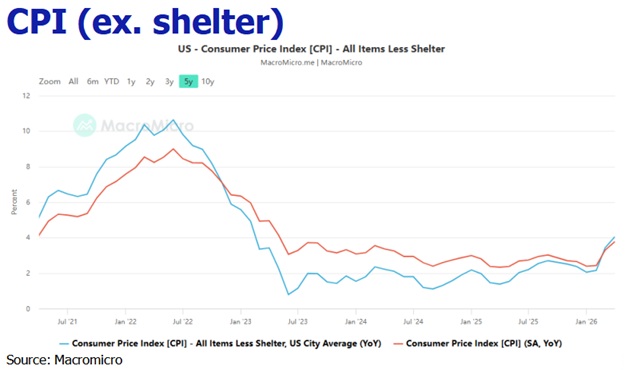
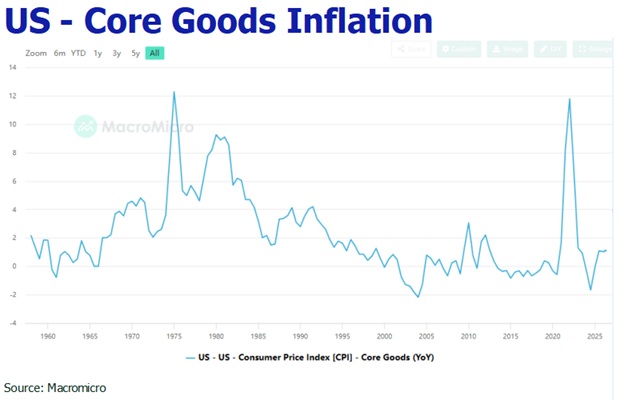
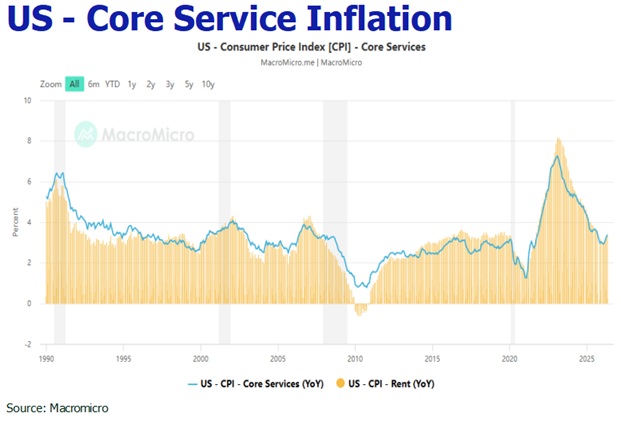
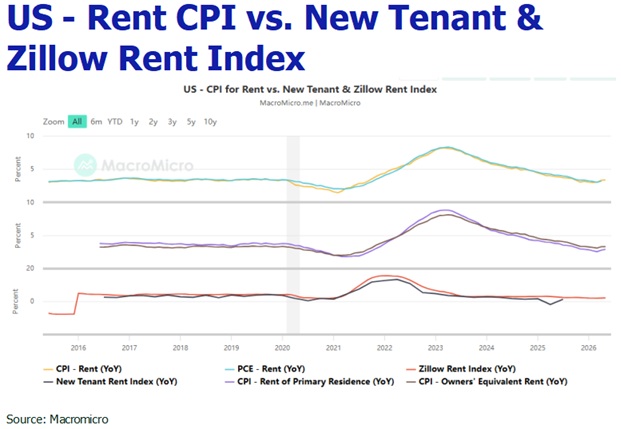
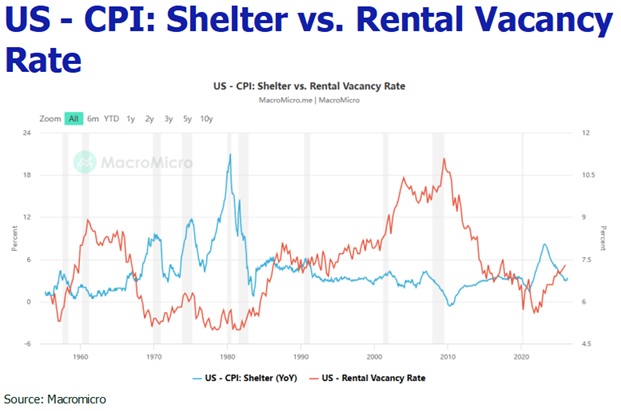
Compounding this energy-driven surge were imported cost pressures stemming from Trump-era tariffs, coupled with an AI-driven capital expenditure boom that cascaded into higher consumer prices for electronics and utilities. The insatiable demand for AI-embedded silicon across a broad spectrum of consumer products effectively amplified end-user costs. Paradoxically, however, the core CPI metric painted a far more benign underlying picture. Stripping out the capricious food and energy components, core inflation edged up 2.9% year-over-year (versus 2.8% in April), while the monthly cadence decelerated significantly to 0.2% from April’s 0.4%. Food prices ticked up a mere 0.2%, and shelter costs—which command over a third of the CPI basket—appreciated by 0.3%, representing a halving of April’s gain. Additional softness was evident in transportation services, which contracted by 0.6%, alongside a 0.3% dip in new vehicle prices and a marginal 0.1% uptick in used cars and trucks. This disinflationary dynamic across discretionary categories is ostensibly a function of demand destruction driven by pervasive consumer affordability constraints.
Labor market maintains solid momentum
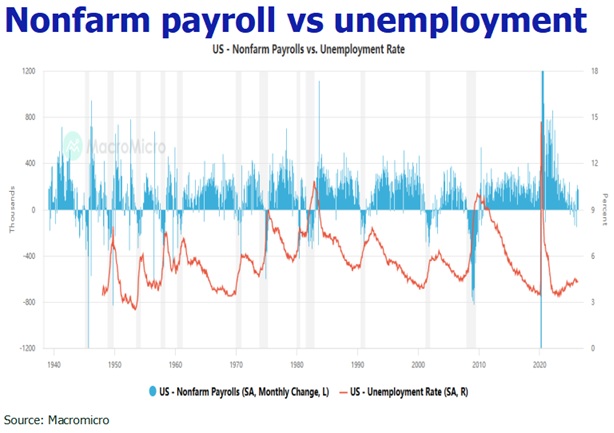
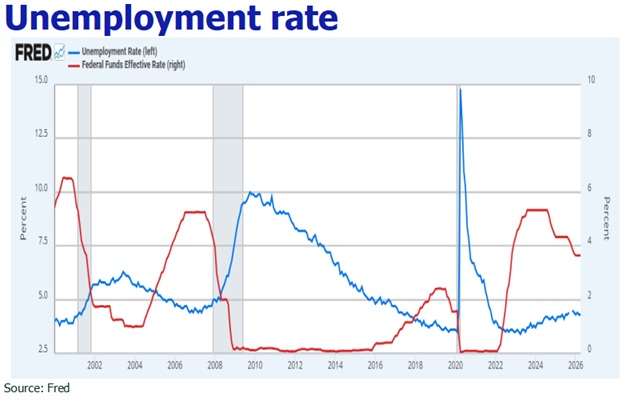
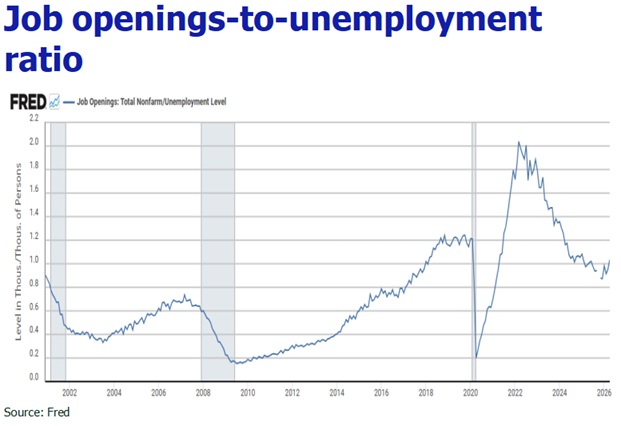
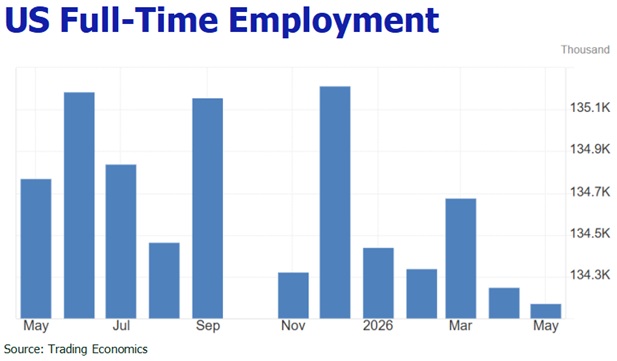
The U.S. labor market sustained its robust trajectory of expansion in May. Nonfarm payrolls swelled by 172,000, a marginal deceleration from April’s upwardly revised 179,000, yet decisively eclipsing the consensus forecast of 85,000. Bolstered by cumulative upward revisions of 93,000 for the preceding two months, this culminated in the most formidable three-month employment gain in over two years. The unemployment rate remained anchored at 4.3%, in lockstep with expectations. The breadth of payroll gains exhibited marked improvement, characterized by broad-based sectoral advances. Leisure and hospitality payrolls surged by 70,000—vastly outpacing its 12-month average of 14,000—underpinned by the ephemeral stimulus of the 2026 World Cup. Local government payrolls expanded by 55,000, complemented by a 35,000-employment increase in healthcare. In stark contrast, the financial sector shed 22,000 jobs in May, exacerbating a cumulative contraction of 107,000 since its cyclical apex in May 2025. Furthermore, the data underscored the disruptive footprint of artificial intelligence on labor utilization: the information sector, encompassing software publishers and social media entities, contracted for the 16th time in 17 months.
A manifestly hawkish inflection at the Federal Reserve
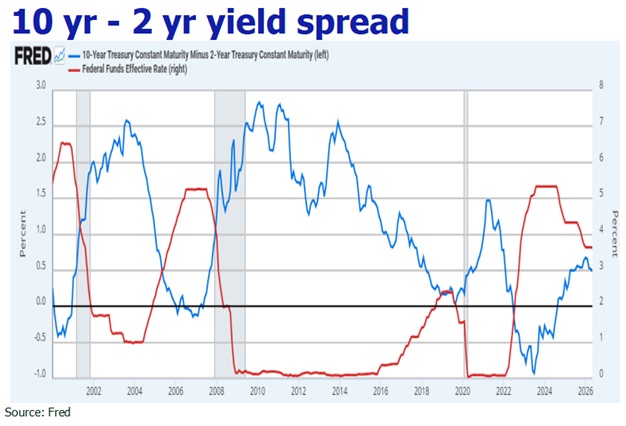
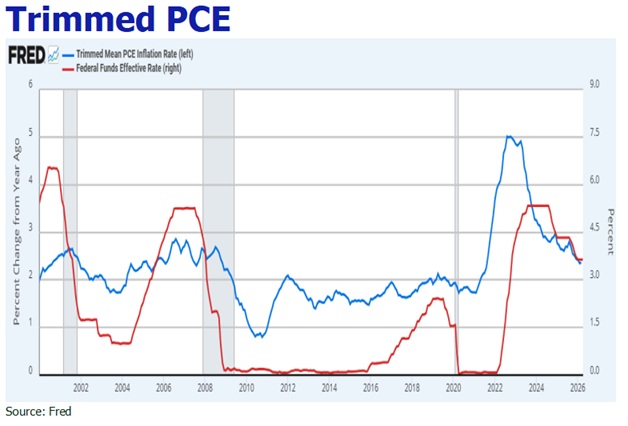
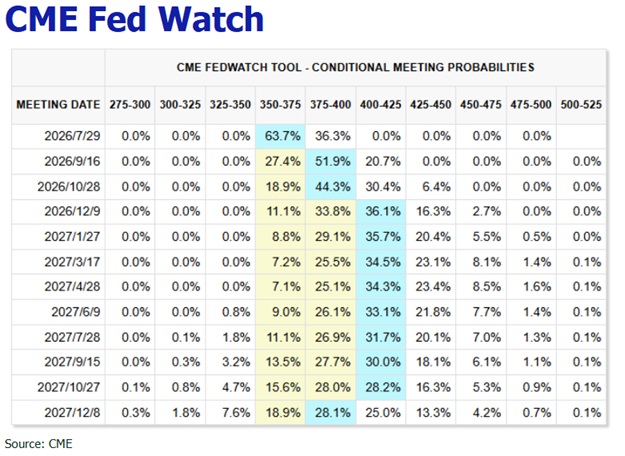
The Federal Reserve’s June 18 policy conclave—the inaugural gathering under the stewardship of newly appointed Chair Kevin Warsh—yielded a decidedly hawkish surprise. Although the target rate was maintained at the 3.50%-3.75% status quo, the newly disseminated dot plot indicated that a plurality of nine FOMC participants now anticipates a minimum of one rate hike before year-end. Concurrently, the projected PCE inflation figure was markedly revised upward to 3.6%. The deliberate excision of forward guidance crystallized this unmistakable hawkish pivot.
Oil plunges on US-Iran ceasefire breakthrough
In a watershed development that fundamentally realigned global energy paradigms, crude oil prices suffered a pronounced correction in June. This downturn followed the announcement of a 60-day ceasefire extension between the United States and Iran, which catalyzed the resumption of Iranian crude exports and the unblocking of the Strait of Hormuz—a critical maritime chokepoint facilitating nearly 20% of global oil transit. The imminent normalization of unimpeded shipping triggered a massive sell-off, with Brent and WTI futures precipitously retracing over 22% to settle within the $70-$75 band.
Gold slips deeper into bear market territory
Bullion remained under severe duress in June, exacerbating the corrective trajectory initiated in May and suffering a double-digit slump of over 10% to breach the $4,000-per-ounce threshold from its prior $4,500 perch. This decline was driven by a confluence of adverse macroeconomic forces. Primarily, resurgent inflation and the ensuing hawkish repricing of rate-hike probabilities propelled bond yields higher, markedly inflating the opportunity cost of holding non-yielding precious metals. Secondly, exacerbated fiscal and current account deficits among several energy-importing nations compelled sovereign entities to monetize their gold reserves for liquidity reinforcement, with Turkey exemplifying this official-sector divestment. Exacerbating these headwinds was persistent profit-taking by speculative capital. Institutional funds that had underpinned gold’s historic rally since late 2025 aggressively unwound positions, pivoting toward a frothy IPO landscape electrified by blockbuster listings from SpaceX, Anthropic, and OpenAI. This capital reallocation effectively starved traditional safe-havens of liquidity, diverting it toward growth-centric, narrative-driven ventures.
Predictions
1.Inflation pressure unwinds slowly
Notwithstanding the dramatic dislocation in oil prices catalyzed by the US-Iran armistice, headline inflation is poised to remain stubbornly elevated in the near term, predicated on several structural frictions:
Protracted lag effects of supply shocks: The finalization of a diplomatic accord does not instantly resolve logistical bottlenecks. The painstaking clearance of naval mines, rehabilitation of compromised energy infrastructure, and recommissioning of shut-in production entail a multi-month timeline. Furthermore, global freight rates, which skyrocketed during the belligerency, lack elasticity in their downward adjustment. The armada of vessels forcibly rerouted around the Cape of Good Hope will require weeks to reposition back to optimal Suez-Hormuz trajectories.
Delayed cost pass-through: A multitude of corporates and retailers had previously procured inventory or executed long-term contractual agreements at peak pricing. These elevated cost bases will inevitably percolate through to final consumer prices over the ensuing quarters.
The World Cup demand shock: Projections from Goldman Sachs suggest that an influx of five to six million international spectators into host municipalities will inject a measurable inflationary impulse. Specifically, demand surges in hospitality, dining, and transit are forecasted to augment June’s core CPI by roughly 0.03 percentage points and core PCE by 0.04 percentage points. This idiosyncratic demand shock is anticipated to abate in July before reversing in August.
2.Fed Policy: cuts off the table, hikes overblown but not ruled out
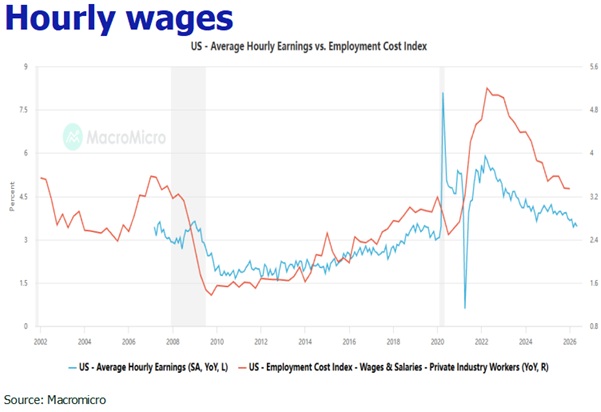
Despite the abrupt deflationary impulse from the US-Iran détente, persistently robust labor metrics and unanchored inflation expectations will likely compel the Federal Reserve to maintain a restrictive holding pattern through the summer of 2026. With core services inflation demonstrating scant disinflationary momentum and wage growth remaining tenacious, the FOMC possesses negligible latitude to resume monetary accommodation without inviting a re-acceleration of price pressures.
However, juxtaposed against this hawkish rhetoric, financial markets appear to have hyperbolized the probability of imminent tightening. The anomalously torrid labor market prints are significantly distorted by the transient World Cup anomaly, which is programmed to dissipate by August. Moreover, the oil price collapse—despite its delayed pass-through—should ultimately impart substantive disinflationary relief to headline CPI by late Q3 or Q4. Within this paradigm, the Fed’s highest-probability trajectory is an extended pause, eschewing both aggressive easing and tightening. Policymakers will likely adopt a posture of vigilant stasis, calibrating their next move to the velocity at which cheaper energy costs permeate the real economy and whether core inflation convincingly regresses toward its 2% mandate.
Nevertheless, the specter of rate hikes remains definitively extant. The interim ceasefire merely suspends—rather than resolves—the foundational geopolitical frictions, most notably Iran’s nuclear enrichment ambitions, leaving the diplomatic framework on tenuous footing. Should negotiations collapse conclusively following the 60-day moratorium, the resultant short-squeeze in oil could be violent and precipitous, potentially catapulting crude back toward the triple-digit thresholds witnessed at the conflict’s zenith. Such a scenario would almost certainly compel the Fed to weaponize rate hikes to quash a secondary inflationary surge.
Disclaimer
All information used in the publication of this newsletter has been compiled from publicly available sources that are believed to be reliable, however, we do not guarantee the accuracy or completeness of this report and have not sought for this information to be independently verified. Forward-looking information or statements in this report contain information based on assumptions, forecasts of future results, and estimates of amounts not yet determinable, and therefore involve known and unknown risks, uncertainties, and other factors that may cause the actual results to be materially different from current expectations.
We shall not be liable for any direct, indirect, or consequential losses, loss of profits, damages, costs, or expenses incurred or suffered by you arising out or in connection with the access to, use of, or reliance on any information contained on this note.