

Disinflation illusions, labor market woes, and the Genesis of AI-led dominance
Austin Or, CFA
Highlights
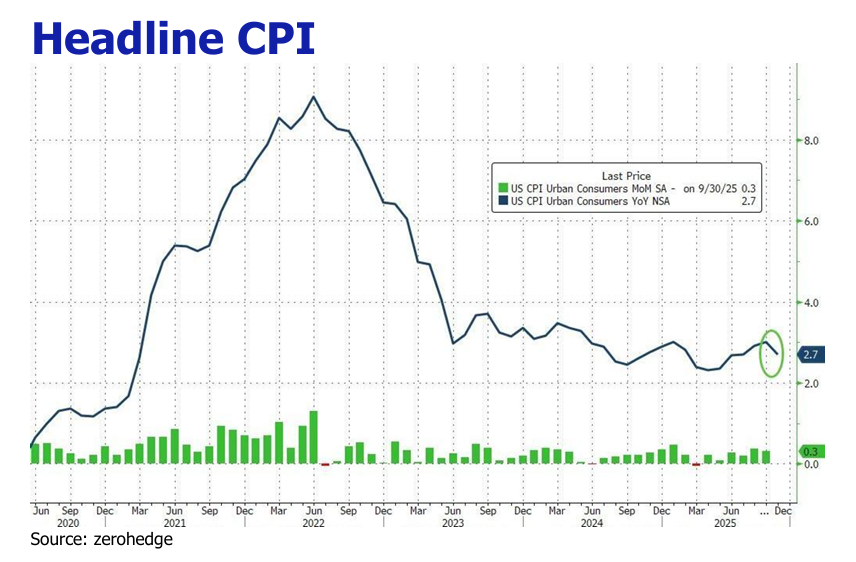
November CPI eased to 2.7%YoY yet distorted by Black Friday discounts and October owners’ equivalent rent (OER) adjustment.
Jitter on sharp October and September downward nonfarm payroll adjustment and higher unemployment rate belie euphoria on the better-than-expected November nonfarm payroll growth.
The Genesis Mission is instituted to pull off a new epoch of American-led technological and economic prosperity leveraging AI investment, holding the potential to inject an additional $1 to $2 trillion into U.S. GDP by 2035.
Although initial tariff impacts have been muted by preemptive corporate inventory stockpiling and promotional pricing, the risk of a resurgent price impulse remains.
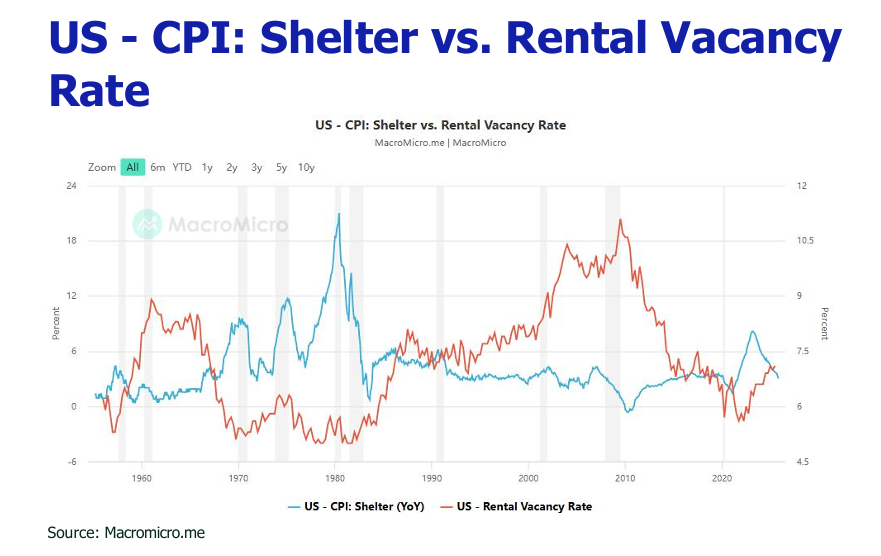
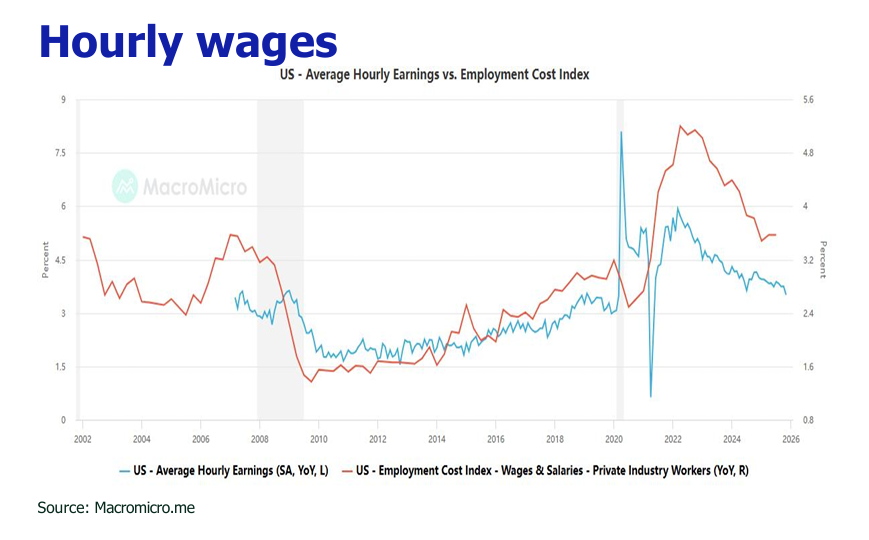
Aclearly easing labor market is tempering wage growth, while a confluence of lagging lease pipelines, rising rental listings, and increased new construction is poised to materially decelerate shelter inflation in 2026.
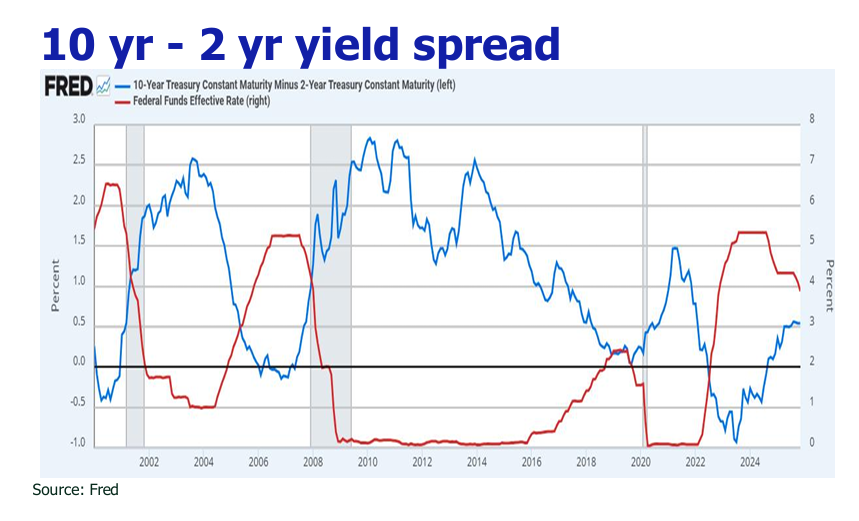
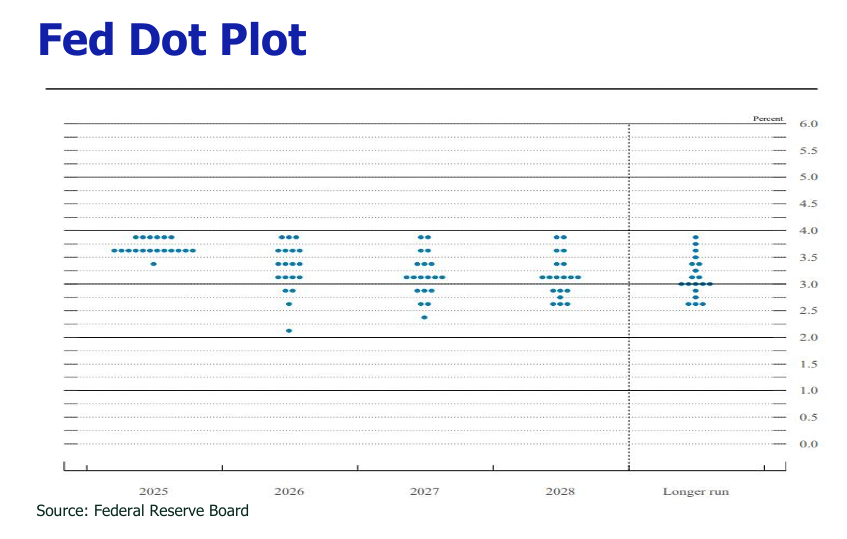
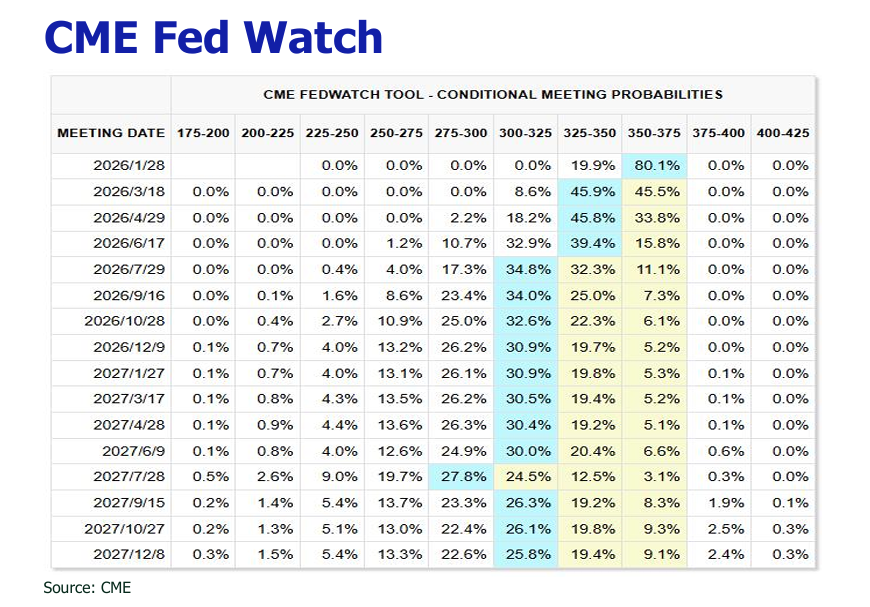
Against this backdrop of muddied inflation signals and mounting labor market slack, the Federal Reserve is expected to continue its normalization path in 2026.
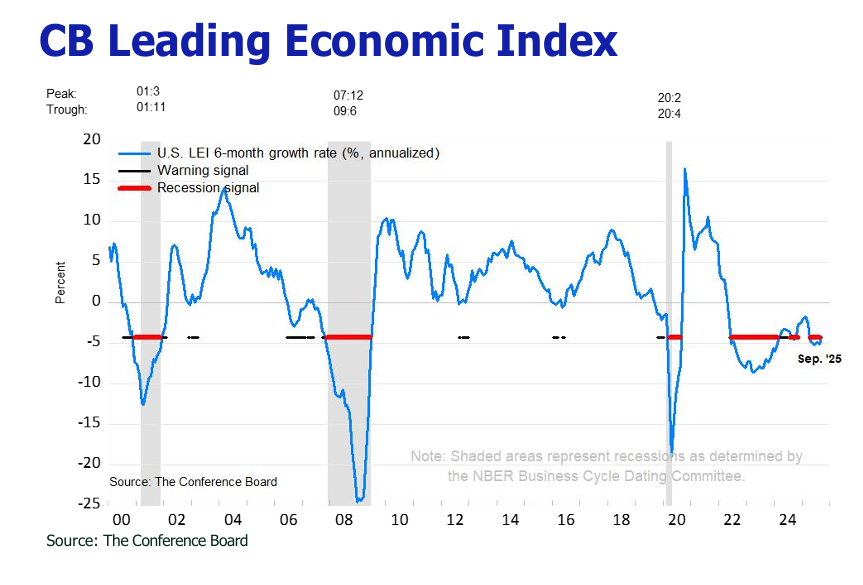
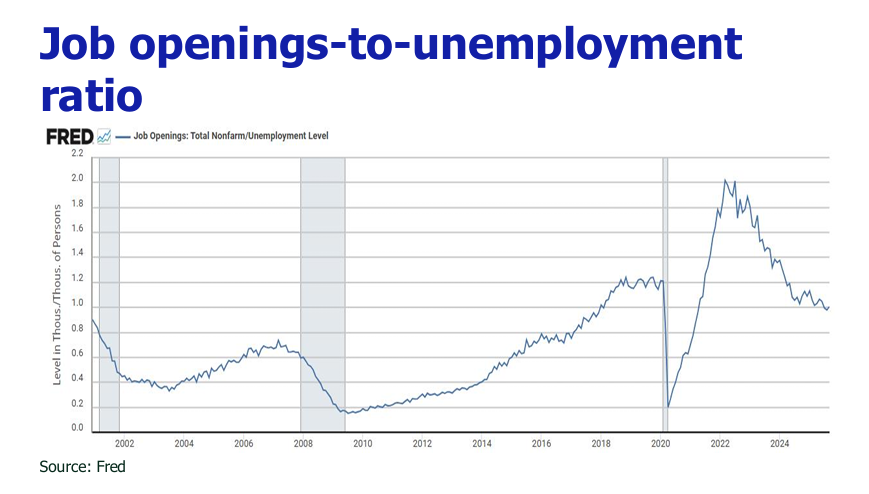
Alabor market facing multifaceted headwinds from continued government layoffs (projected 50k-100k), AI-driven role displacement, and tariff-affected sectors.
Ourbaseline forecast anticipates one further 25bp cut in 2026, and the ultimate pace will be a function of confirmed inflation moderation and, critically, the doctrinal leanings of the next Fed Chair.
The Hang Seng Index remained capped below 26,000 throughout much of the period, with daily turnover ranging between HK$160–240 billion.
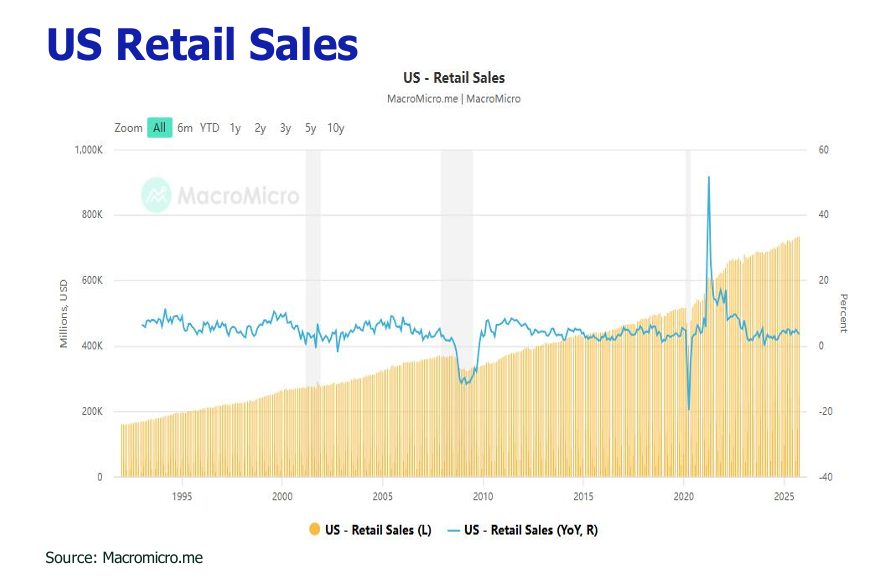
The tailwind from the Federal Reserve’s mid-December 25-basis-point rate cut was largely offset by persistent liquidity concerns among Hong Kong and mainland developers, compounded by November’s low single-digit growth in China retail sales.
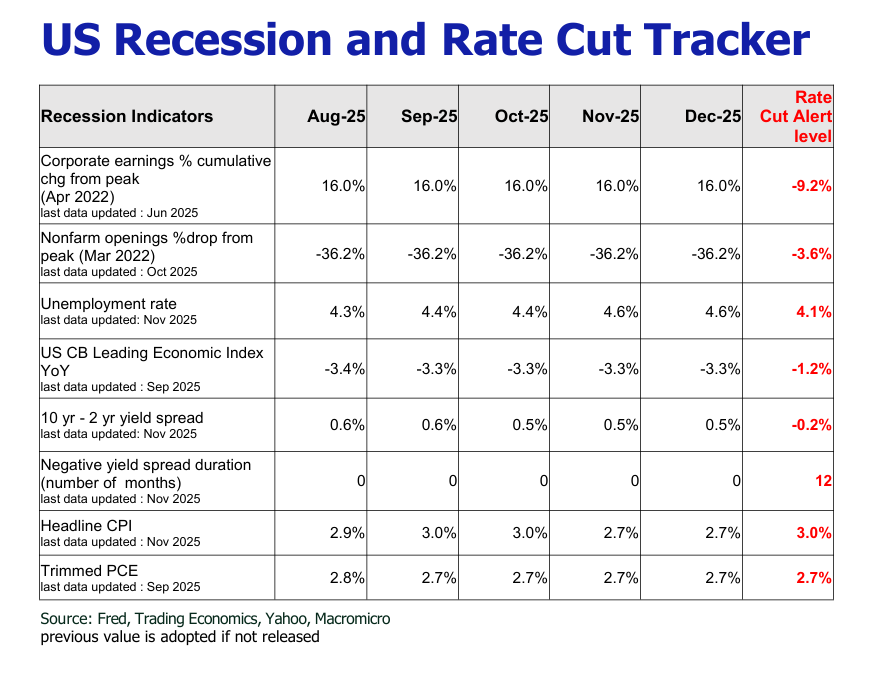
November CPI: a deceptively benign print
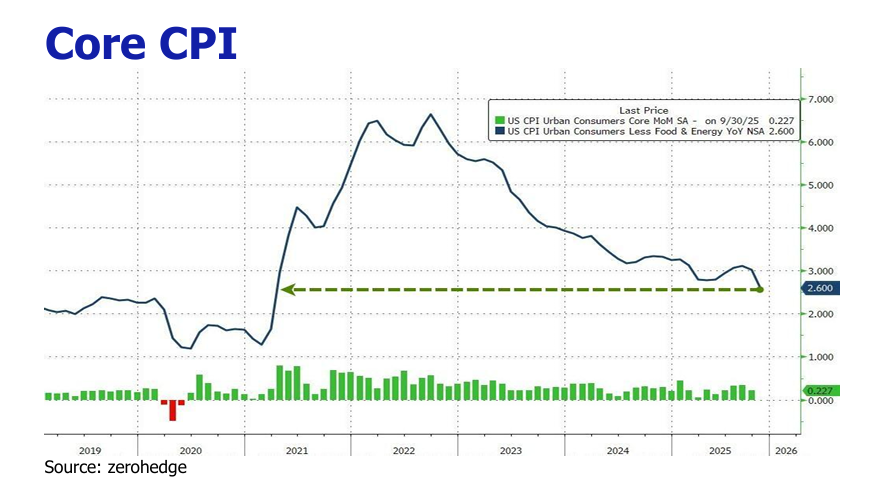
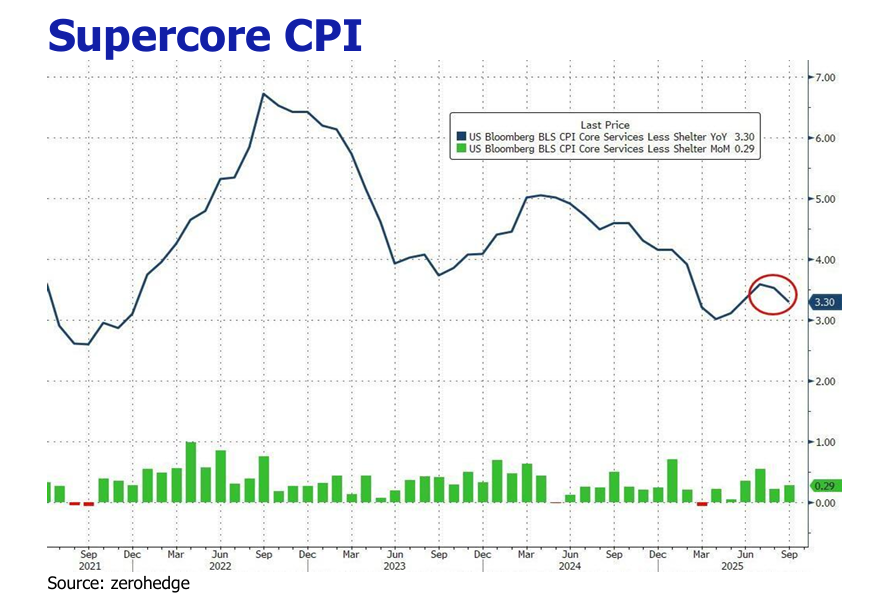
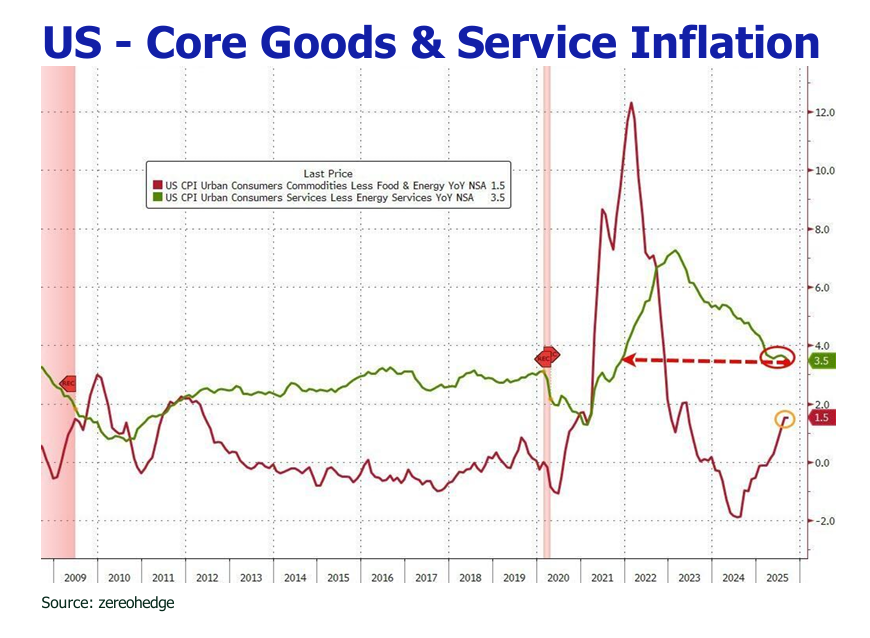
The November Consumer Price Index report, which followed a canceled October release due to data collection issues, presented a paradox of eased but distorted disinflation. Headline inflation decelerated unexpectedly to 2.7% year-over-year (down from 3.0% in September), with core CPI following suit at 2.6% (from 3.0%). The monthly gains for both all-items and core indices were a modest 0.2%.The deceleration was broad-based. The “super-core” CPI (excluding food, energy, and shelter) fell markedly to 2.3% year-over-year, signaling cooling price pressures in the non-housing services sector. Although energy prices rose 4.2%, the disinflationary impulse from food (slowing to 2.6% YoY) and core goods (1.4% YoY) was decisive. Most significantly, shelter inflation—constituting over 40% of core CPI—decelerated sharply to 3.0%, pulling core services inflation down from 3.5% to 3.0%. However, this benign snapshot requires heavy qualification. The print was artificially suppressed by the outsized discounting effects of Black Friday sales (with average price reductions of 20-30%) and a methodological artifact: the October Owners’ Equivalent Rent (OER) was held at September’s level, a technical adjustment that understates the true underlying inflationary trend.
Labor market enters a winter of softening
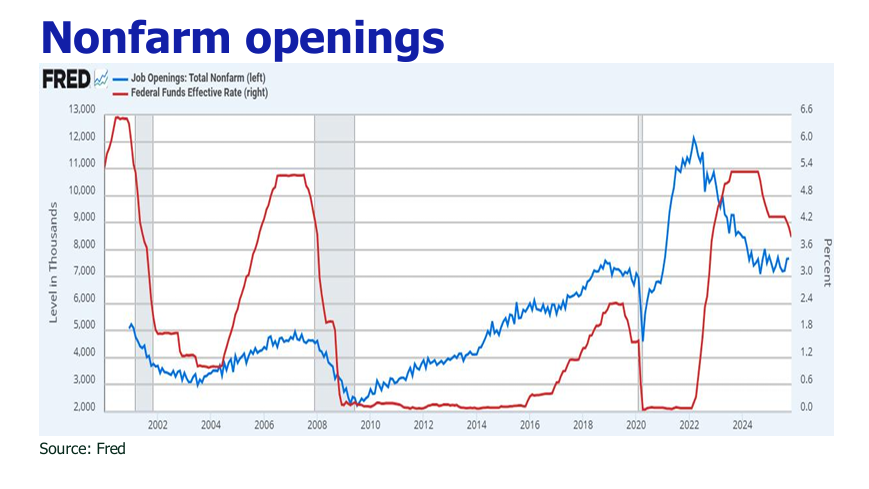
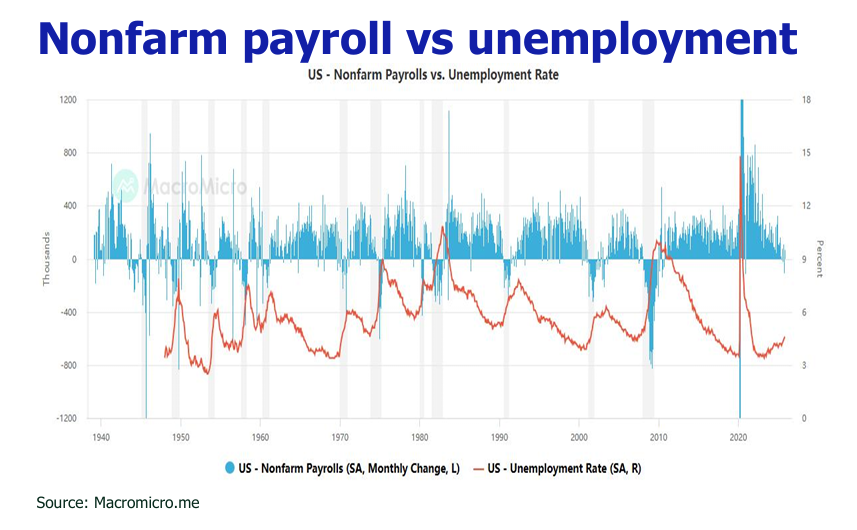
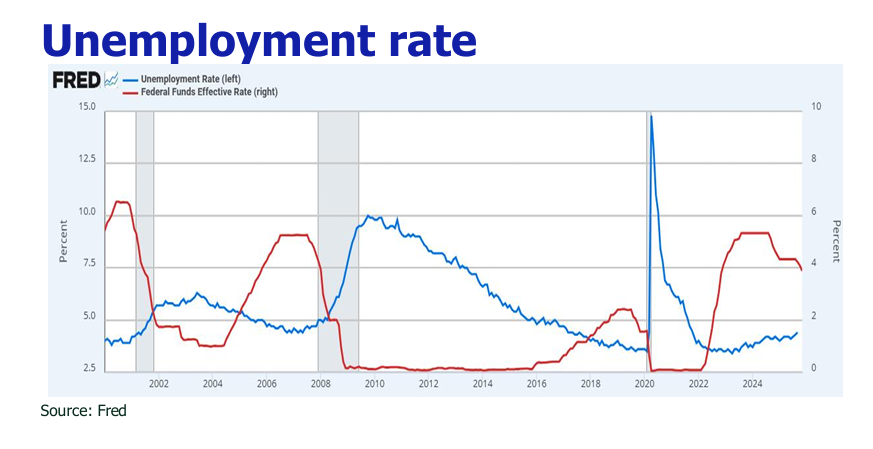
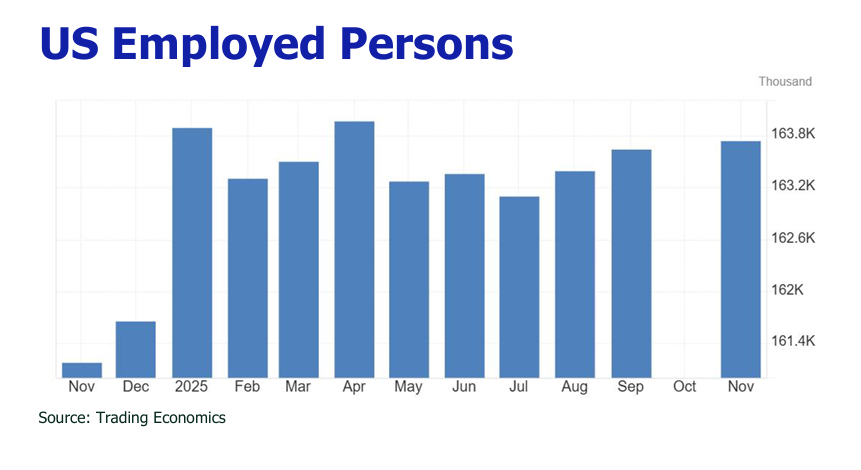
The November jobs report revealed a labor market entering a wintry phase of stagnation and compositional deterioration. While nonfarm payrolls added 64,000 jobs—surpassing expectations of 50,000—this figure obscures a deeply concerning trend. Downward revisions slashed 105,000 jobs from October’s count, and the nation has added a mere 100,000 jobs in the past six months. Concurrently, the unemployment rate rose unexpectedly to 4.6%, its highest level since September 2021.
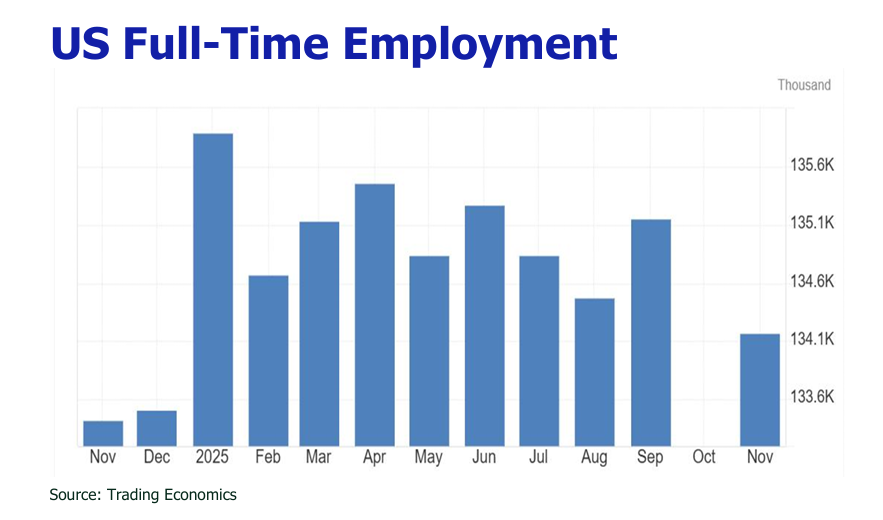
Beneath the surface, the labor market’s structure is fraying. Job gains are now hyper-concentrated in healthcare, which accounted for over 70% of November’s net increase (+46,000). More alarmingly, the composition of employment is shifting precariously: since September, full-time employment has plunged by 983,000, while part-time positions have surged by over one million. The number of multiple jobholders spiked by nearly 500,000, reaching a historic high.
A significant portion of the recent weakness stems from the public sector, where deferred layoffs have materialized. Government payrolls plummeted by 162,000 in October and fell a further 6,000 in November. Federal government employment has now contracted by 271,000 since its January peak. According to Office of Personnel Management (OPM) data, total separations have reached approximately 317,000, meaning the Department of Energy’s (DOE) targeted workforce reduction of 300,000–400,000 has already been 80% oversubscribed.
The Genesis Mission: Charting a Course for AI-Led American Prosperity
The “Genesis Mission,” a landmark national initiative, represents a strategic pivot to secure long-term U.S. economic and technological primacy through artificial intelligence. By orchestrating a targeted, multi-front assault on the most consequential scientific and industrial frontiers, the initiative aims not merely to foster innovation but to orchestrate a structural transformation of the American economy and its geopolitical posture. Its envisioned impact is both profound and multi-layered, promising a cascade of benefits across investment, employment, sectoral productivity, and global influence.
Energy: AI is used to accelerate the design and deployment of advanced nuclear reactors and fusion energy to reduce energy dependence and costs. AI-accelerated discovery of new materials (e.g., room temperature superconductors, better battery chemistries, fusion reactor designs) could lead to disruptive abundance, collapsing energy costs and creating entire new export industries.
Biotechnology: Dramatically shortened drug discovery timelines, personalized medicine, and AI designed biologics could revolutionize healthcare (improving productivity/longevity) and create a massive high-value export sector.
Quantum Computing: Achieving “quantum advantage” in specific fields (cryptography, chemical simulation) would spawn a new ecosystem of hardware, software, and service companies, securing a first-mover advantage in what is predicted to be a future trillion-dollar market.
National Security: AI agents are used to discover and test new materials that are “defense-ready,” potentially for use in next-generation armor, aircraft, or hypersonic vehicles. AI is utilized to discover substitutes for critical materials and rare earth elements, reducing the economic leverage that foreign nations—specifically China—hold over U.S. supply chains.
American AI Exports: The administration launched the “American AI Exports Program” to promote full-stack U.S. AI technology (hardware, models, and software) to allies.Secure AI and quantum-resilient encryption would become critical global products.
Geopolitical Leverage: By making the world “run on American technology,” the U.S. gains significant financial and political control, preventing partner nations from turning to rival technologies that could compromise global security.
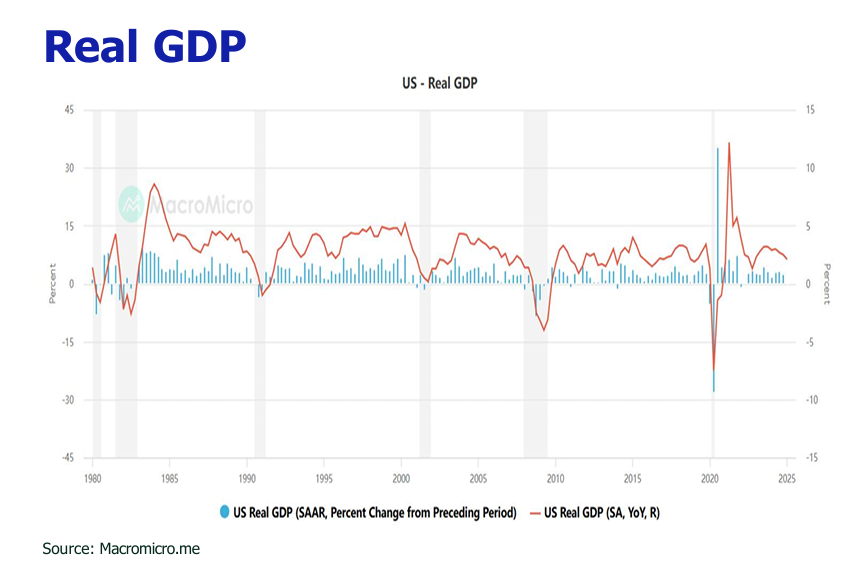
GDP boost: The Genesis Mission is supported by an estimated $1 trillion in private and public investments focused on AI infrastructure, including semiconductor “fabs” and high-capacity data centers. CSIS analysis projects “multiplier effect” similar to internet-era R&D, potentially adding $1–$2T to GDP by 2035 if breakthroughs commercialize.
Prediction
1. Inflation trend remains murky
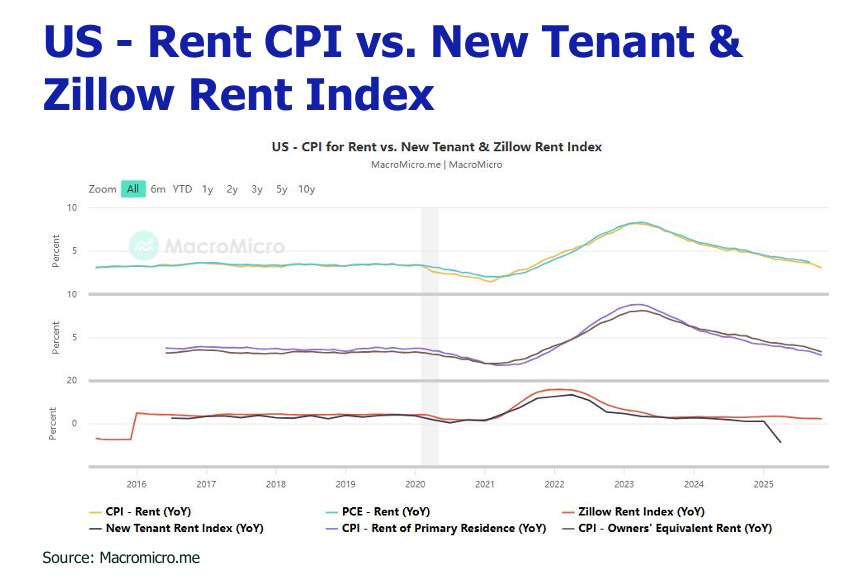
November’s apparent easing in inflation was largely a transitory artifact, driven by Black Friday discounts (averaging 20–30%) that heavily influenced goods prices, and an artificially subdued shelter component resulting from the carry-forward of September OER data due to the October government shutdown. Although tariff pass-through has proven milder than anticipated—thanks to pre-tariff inventory stockpiling and aggressive discounting—tariff-sensitive items continue to contribute 20–30% of residual goods inflation. We remain cautious of a potential rebound in December and into 2026 as these buffers exhaust. That said, a softening labor market is exerting downward pressure on wage growth, while lagged pipeline rents, rising inventory levels, and increased new construction (despite builder caution) are progressively easing rental pressures. These dynamics are expected to drive meaningful disinflation in housing costs throughout 2026.
2.Further rate cuts in 2026
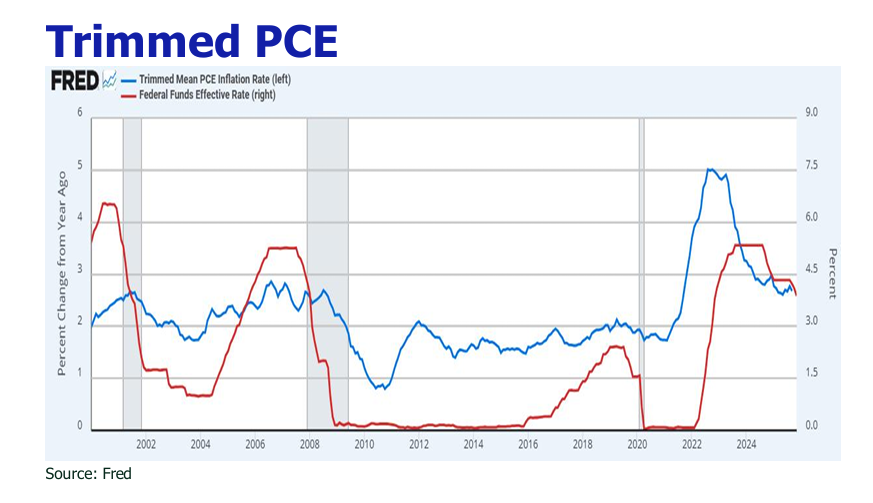
As of late December 2025, the Federal Reserve has implemented a 25bp cut in December, bringing the federal funds rate to 4.25–4.50%. Markets are currently pricing in approximately 25bp of additional easing across 2026, amid growing divergence among Fed officials. Given the one-off nature of tariff-induced inflation and the prevailing downward trend in housing costs, we anticipate milder headline inflation in 2026. Moreover, ongoing pressures on the labor market—stemming from further government layoffs (estimated 50,000–100,000), AI-driven displacement, and tariff-related job losses—are likely to necessitate continued monetary accommodation to secure a soft landing. The baseline scenario envisions one additional rate cut in 2026, reflecting the shared preference for lower rates among the three leading candidates for the next Federal Reserve Chair: Kevin Hassett, Kevin Warsh, and Christopher Waller—all of whom have signaled a desire to align with the administration’s priorities. Among them, Kevin Hassett stands out as the most dovish, asserting that there is “plenty of room” for substantial rate reductions, underpinned by robust productivity gains and capital investment that could elevate potential GDP above 3–4%. Should Hassett secure the Chairmanship, the probability of more aggressive easing in 2026 would rise significantly, in our view.
Disclaimer
All information used in the publication of this report has been compiled from publicly available sources that are believed to be reliable, however we do not guarantee the accuracy or completeness of this report and have not sought for this information to be independently verified. Forward-looking information or statements in this report contain information that is based on assumptions, forecasts of future results, estimates of amounts not yet determinable, and therefore involve known and unknown risks, uncertainties and other factors which may cause the actual results to be materially different from current expectations.
We shall not be liable for any direct, indirect or consequential losses, loss of profits, damages, costs or expenses incurred or suffered by you arising out or in connection with the access to, use of or reliance on any information contained on this note.