

Under a bleak cloud: a toxic mix of layoffs, liquidity squeeze, and hawkish Fed darkens the horizon

Austin Or, CFA

Highlights

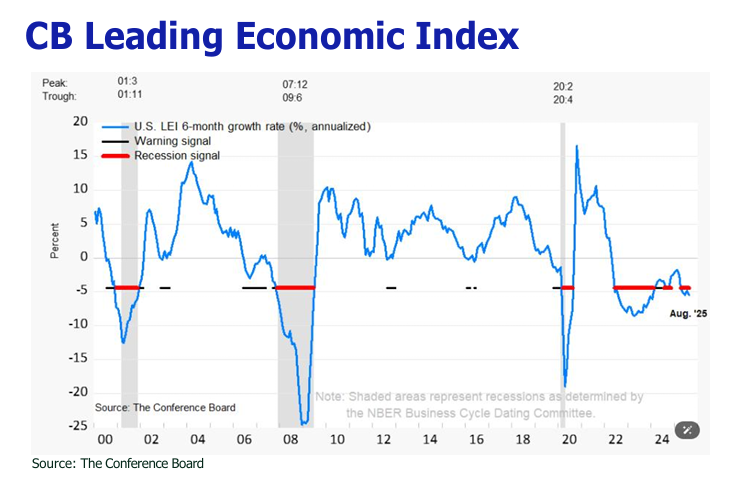
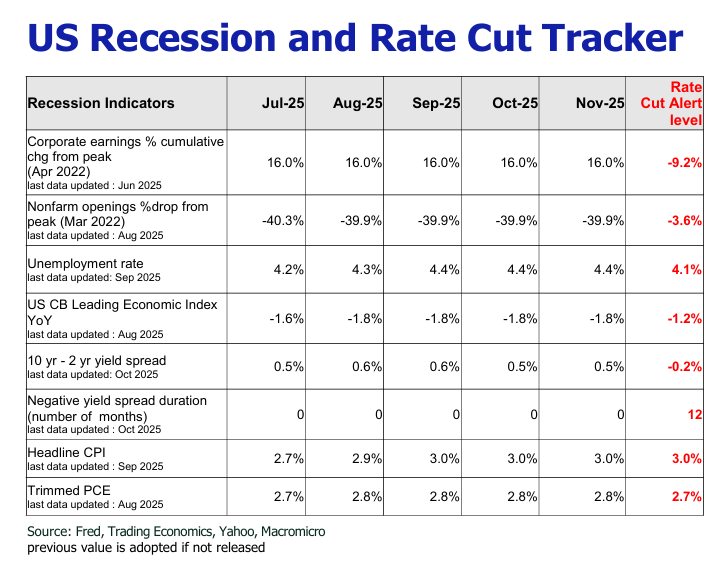
A significant wave of layoffs, led by tech sector restructuring and spreading to other industries, signals a rapidly deteriorating US labor market yet September nonfarm payrolls rose by 119,000.

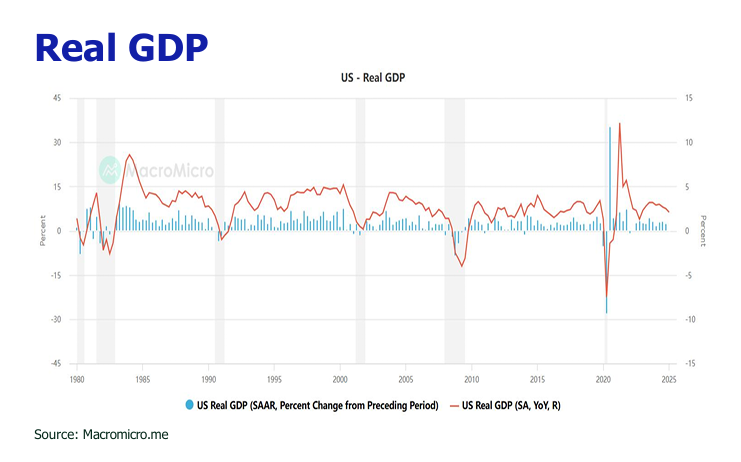
The 43-day U.S. government shutdown (Oct 1–Nov 12/13, 2025) acted as a massive liquidity drain, pressuring stocks (S&P-4%) and crypto (Bitcoin-20%); estimated 1.5pp drag on Q4 GDP, with risk of another shutdown in 2026.

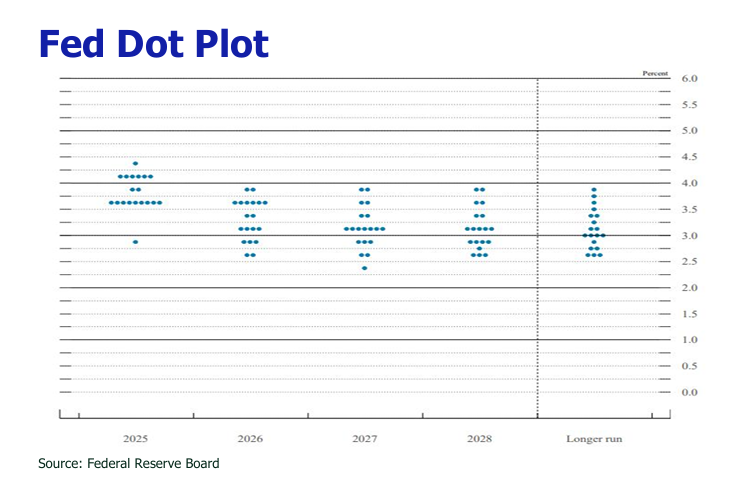
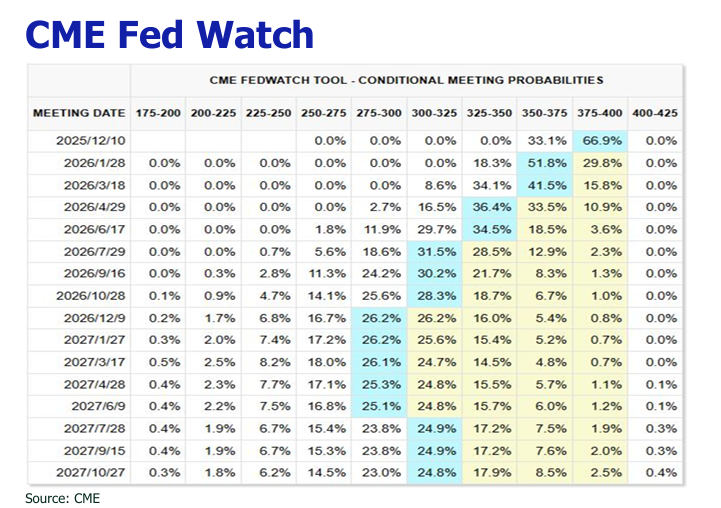
Hawkish Fed rhetoric and a post-shutdown economic data blackout have significantly reduced the likelihood of a December rate cut.

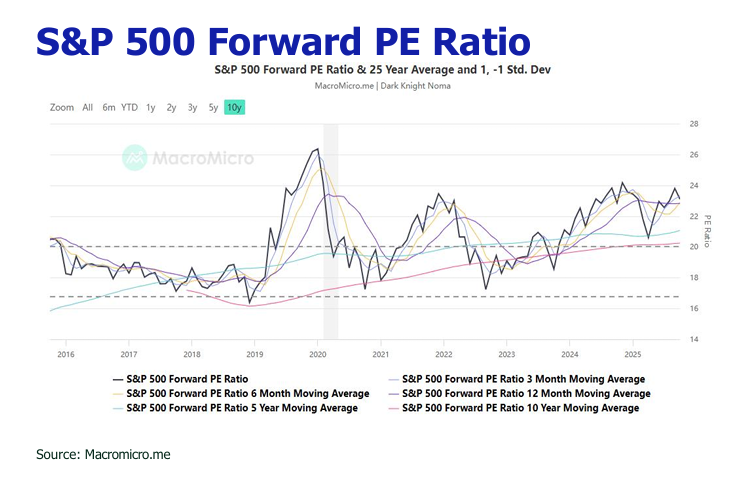
Despite layoffs, delayed easing, and AI doubts, current risk-off is viewed as temporary; a powerful future rally is expected from resilient earnings, AI maturation, and fiscal stimulus convergence.

Recent layoffs reflect proactive, strategic restructuring for efficiency and AI integration, which has preserved corporate profitability and margin resilience.

AI ismaturing from a speculative hype cycle into a tangible driver of a “productivity boom,” creating persistent, structural demand for computing infrastructure.

The new fiscal act- OBBBA provides a powerful, pro-cyclical boost through corporate tax incentives and individual benefits, set to lift earnings and fuel consumer spending.

An initial rally spurred by a PBOC RRR cut and a US-China tariff truce was swiftly undone by negative spillover from US markets. As AI concerns and a halted Fed rate cut cycle sparked a Wall Street sell-off, the HSI gave up its gains. The index ended the period slightly down, consolidating around 26,000 amid subdued daily turnover of HK$200-250 billion.
A tale of contradictory signals for US labor market

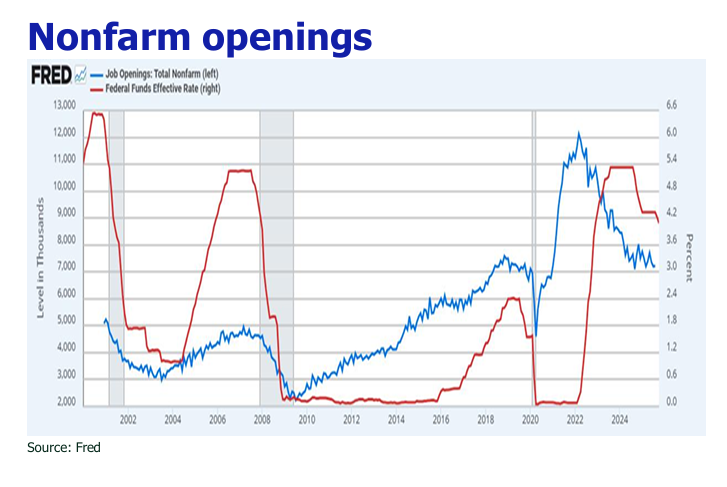
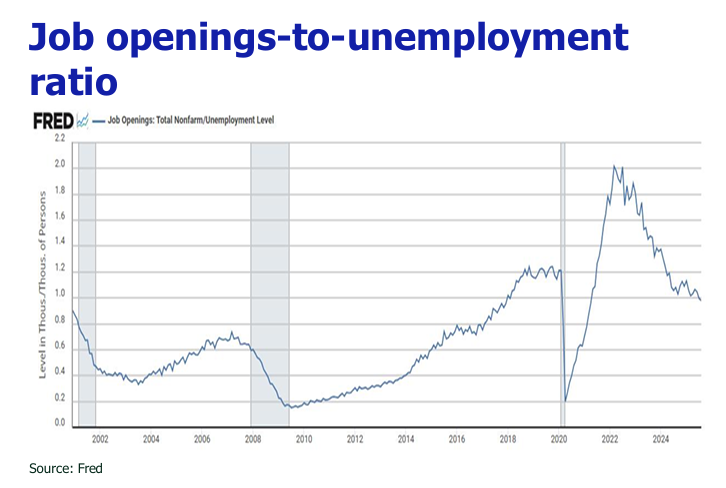
The U.S. labor market in the autumn of 2025 has produced a strikingly mixed picture. Private-sector data point to clear deterioration, while the official government report appears, at first glance, more resilient—yet both narratives ultimately describe the same cooling trend. Private-sector indicators reveal a sharp acceleration in layoffs. ADP Research reported an average weekly loss of 2,500 jobs over the four weeks ending November 1. Challenger, Gray & Christmas recorded 153,074 announced job cuts in October alone—a 183% surge from September and the highest monthly total since the pandemic peak. The technology sector has been at the epicenter: Amazon eliminated roughly 14,000 corporate roles, Meta cut several hundred (including AI-lab staff), and IBM, Google, and Applied Materials each announced reductions numbering in the low-to-mid thousands. The pain has spread beyond tech to UPS, Target, Paramount, General Motors, and others, reflecting a broad corporate drive toward cost reduction and reallocation of resources toward artificial intelligence.

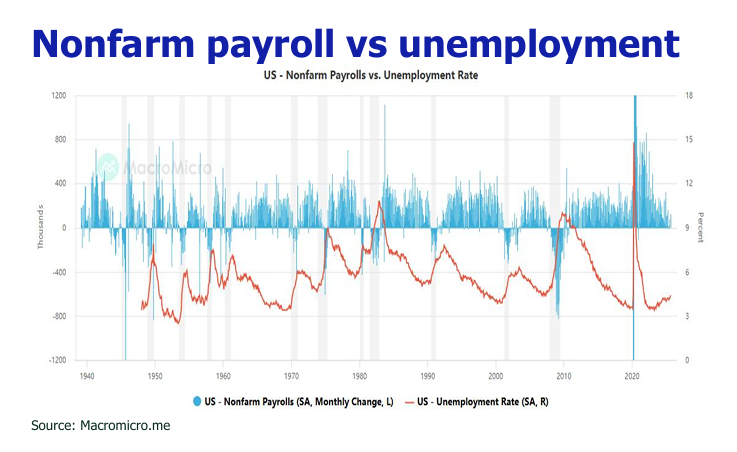
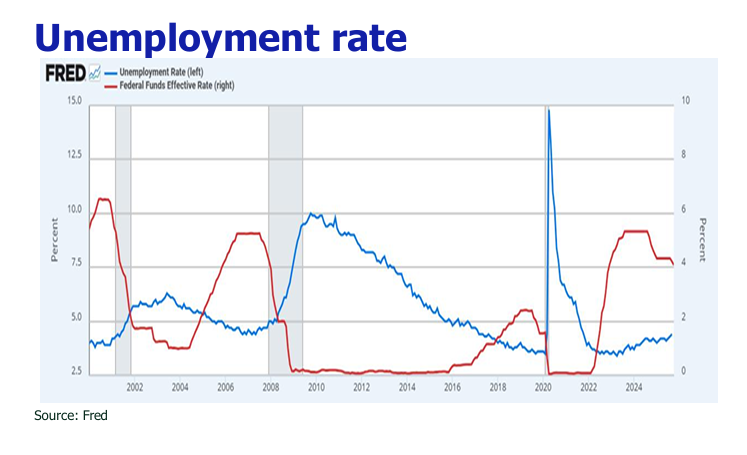
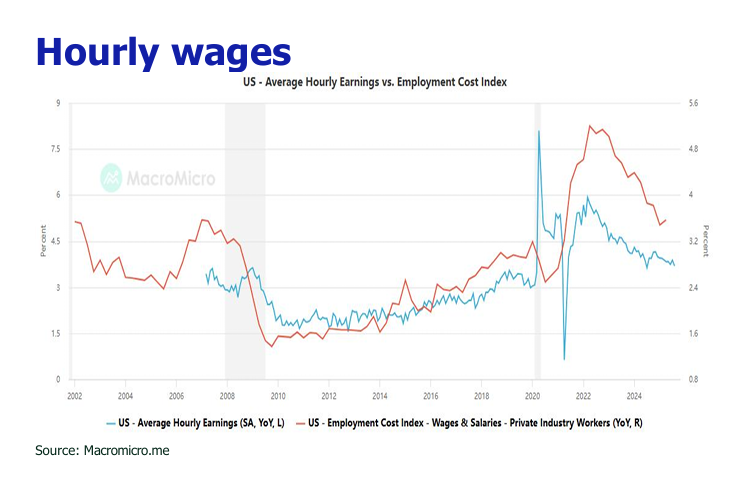
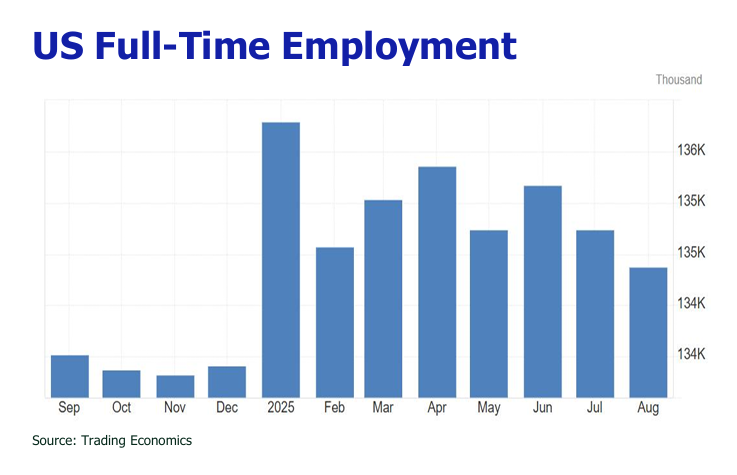
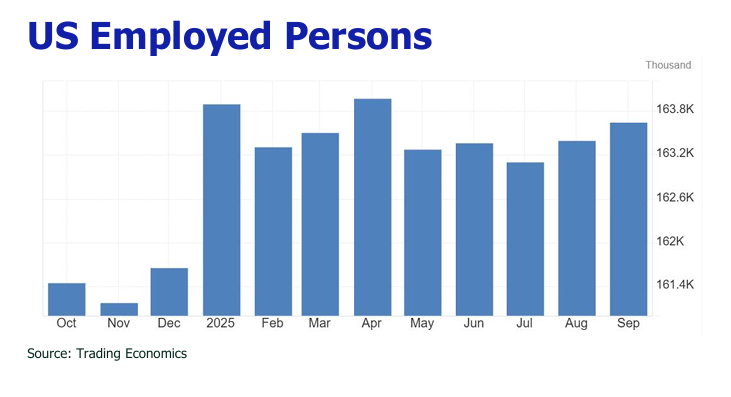
In contrast, the official September employment report—released on November 20 after delays caused by a government shutdown—showed nonfarm payrolls expanding by a surprisingly robust 119,000, well above the consensus forecast of 50,000. Yet the unemployment rate still ticked higher, from 4.3% to 4.4%, reaching a four-year high. This seemingly paradoxical outcome is explained by a surge in labor force participation (from 62.3% to 62.4%). More Americans re-entered the job market than actually found work: the civilian labor force grew by 470,000 while civilian employment rose by only 251,000, adding roughly 219,000 to the ranks of the officially unemployed. Gains were concentrated in traditionally defensive and seasonal sectors—healthcare (+57,000) and leisure & hospitality (+47,000)—while transportation (-25,000) and professional & business services (-20,000) posted notable declines. Wage growth cooled to 0.2% month-over-month and 3.8% year-over-year, further evidence of softening labor demand.

Prolonged US government shutdown drained liquidity, dragging economy and stock market

The U.S. economy was grappling with the repercussions of a historic 43-day government shutdown from October 1 to November 12/13, 2025. The fiscal impasse precipitated a severe liquidity drain, as the Treasury General Account (TGA) ballooned from approximately $800–850 billion to a peak exceeding $1 trillion. This effectively sequestered an estimated $700+ billion in net liquidity from the financial system, functioning as a form of stealth quantitative tightening. The consequent strain was palpable in funding markets, precipitating elevated repo and SOFR rates and exerting downward pressure on risk assets. The S&P 500 declined 4%, while Bitcoin fell roughly 20% from its October highs amid the liquidity squeeze. The Congressional Budget Office had previously estimated that a shorter, six-week shutdown would cost the economy $11 billion; the White House National Economic Council projected the protracted closure would shave 1.5 percentage points from annualized Q4 GDP growth. Although a temporary funding bill has ended the stalemate, its expiration on January 30, 2026, leaves the threat of a future shutdown ominously unresolved.

Prediction

1. Hawkish signals from Fed officials and data blackout hesitate December rate cut.

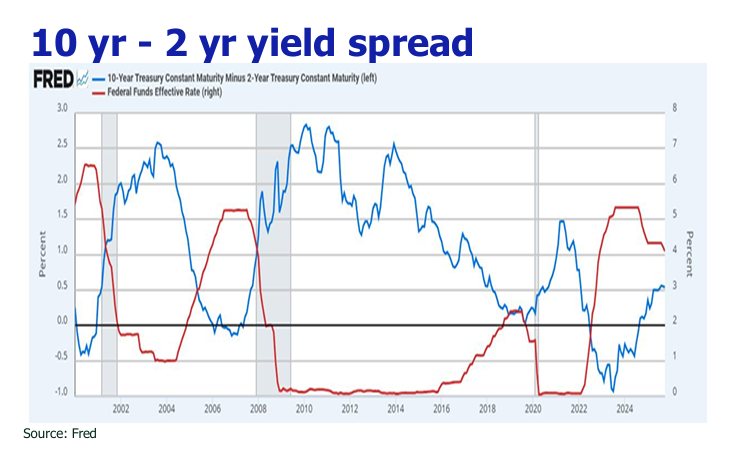
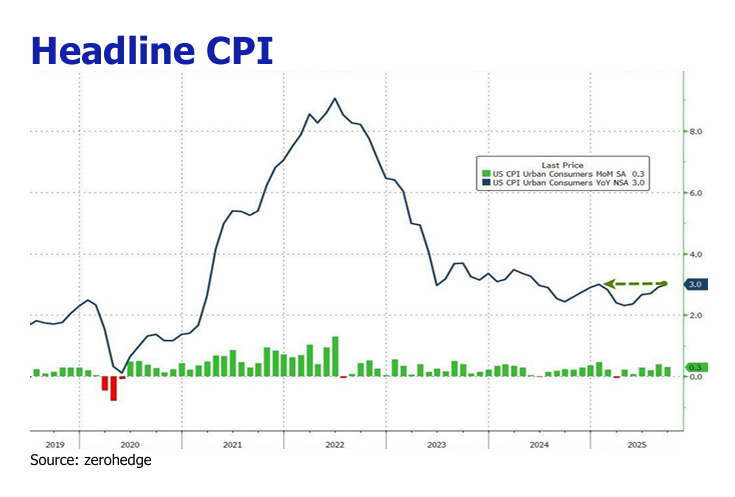
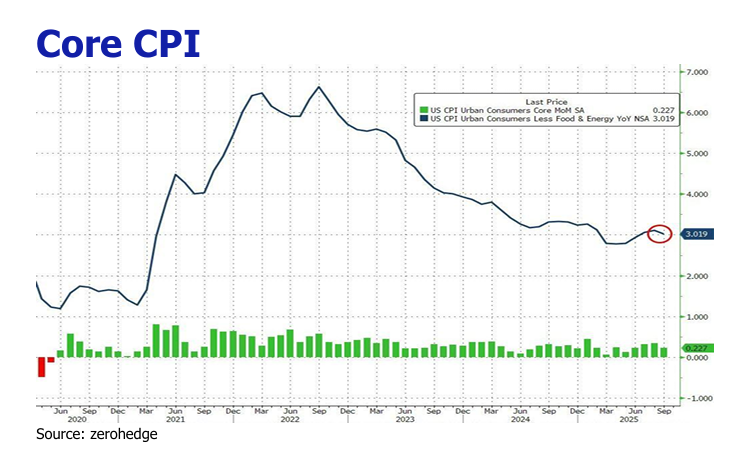
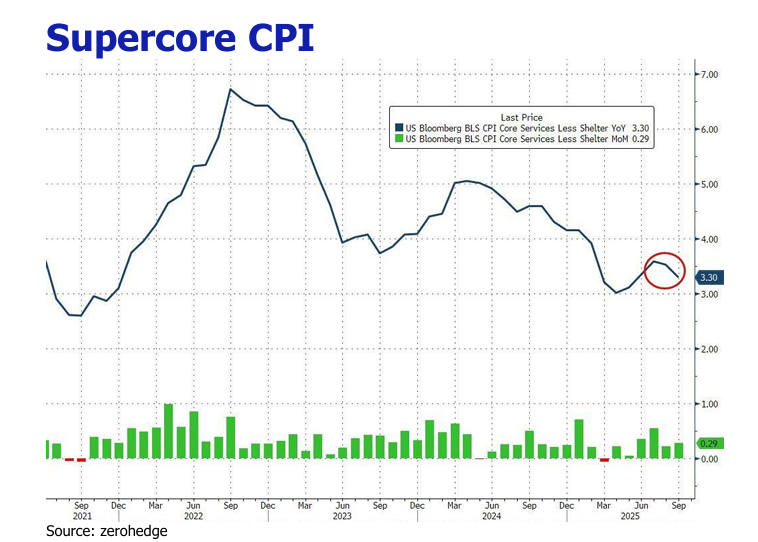
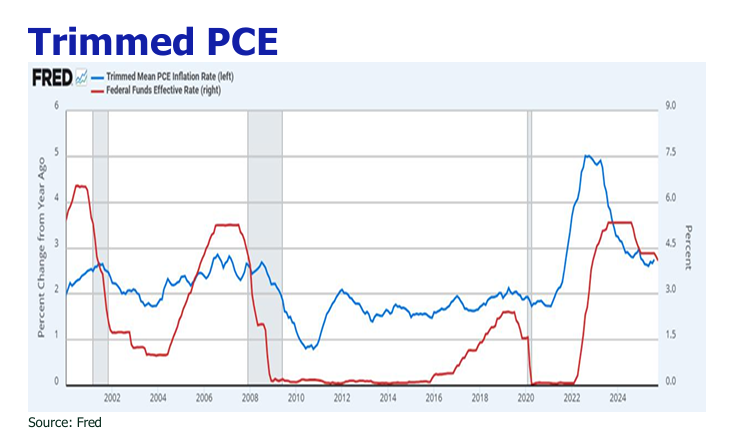
Market expectations for imminent monetary easing have waned considerably in the wake of hawkish commentary from Federal Reserve officials. The probability of a 25 basis-point rate cut at the December 10 FOMC meeting has plummeted to slightly below 50%, a stark decline from the near-certainty priced in late October. Influential Fed governors have strenuously pushed back against market dovishness, emphasizing a notably higher bar for any further policy relaxation. Compounding the uncertainty, the post-shutdown period will see a chaotic release of backlogged economic data. The October and November reports will be released together on December 16th, meaning that the September report is the last employment report the Federal Reserve can see before the December 9-10 meeting, which may make the December decision more difficult. A “hawkish hold”—a decision to pause while signaling continued vigilance against inflation—is increasingly solidified as the base case.

2.Positioning for a future rally: resilient earnings, renewed AI optimism and fiscal boost.

While the current landscape presents apparent headwinds—a wave of layoffs, delayed monetary easing, and skepticism around AI sustainability—we interpret these not as precursors to a downturn, but as transient risk-off sentiment and profit-taking within a broader bullish cycle. We anticipate a powerful convergence of resilient corporate fundamentals, expansive fiscal stimulus, and the tangible maturation of artificial intelligence will reignite market momentum.

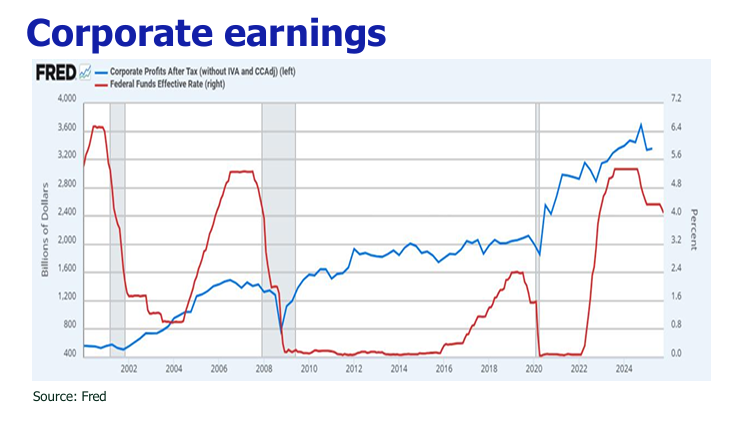
Corporate earnings: strategic restructuring underpins margin resilience

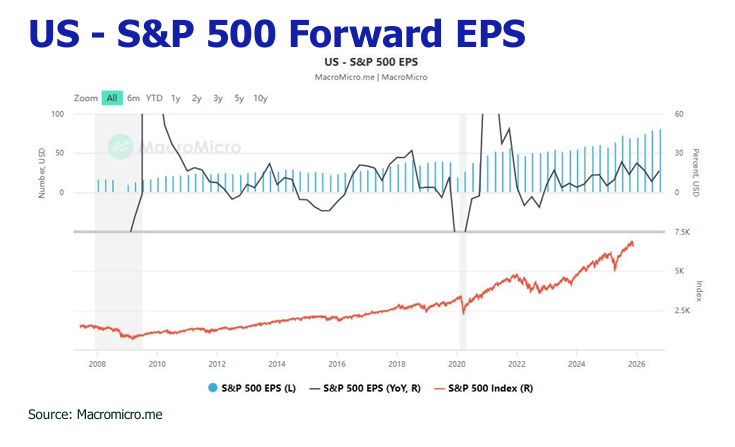
The recent organizational restructuring across technology, retail, and logistics is largely a proactive optimization for an AI-driven future, rather than a reactive response to demand collapse. This strategic pivot has successfully contained operating expenses, preserving profitability. Furthermore, large-cap enterprises, particularly those dominating the S&P 500, have demonstrated remarkable agility in mitigating cost pressures. Through a combination of strategic pricing power, diversified supply chains (e.g., nearshoring to Mexico and Vietnam), and sophisticated financial hedging, they have averted a severe compression of gross margins, laying a foundation for sustained earnings growth.

The AI narrative: shifting from speculative hype to tangible productivity

The narrative surrounding Artificial Intelligence is undergoing a critical evolution: from speculative investment to a driver of a fundamental “productivity boom.” We are transitioning from an “exploration phase” to a “comprehensive production phase,” where AI is being deeply embedded into the core workflows of industries and daily live from financial risk modeling, scientific research and pharmaceutical discovery to industrial design and content creation to robotics and autonomous vehicles. This deep integration signifies a shift from ephemeral model-training demands to sustained, non-discretionary need for computational power. An explosion in inference workloads will create a persistent and rigid demand for Al infrastructure. Consequently, tech behemoths are projected to elevate capital expenditures from approximately $380 billion this year to a range of $550-$600 billion by 2026. While the current investment surge is concentrated in software and computing peripherals, the next growth frontier lies in the build-out of next-generation data centers. We share with Nvidia CEO Jensen Huang’s view that three fundamental platform shifts driving sustainable growth: the transition from general-purpose to accelerated computing, the rise of generative Al, and the emergence of agentic and physical Al applications.

The OBBAA Act: a potent, pro-cyclical fiscal injection

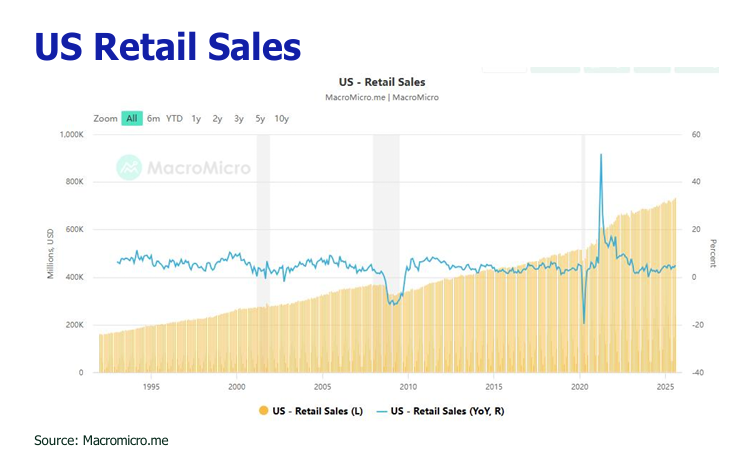
The enactment of the “One Big Beautiful Bill Act” (OBBAA) represents a profound fiscal tailwind. Its provisions-including permanent extensions of the TCJA, bonus depreciation, and full R&D expensing— are projected to provide a 5-8% lift to corporate EPS by lowering effective tax rates and incentivizing capital investment. Simultaneously, its landmark allocations for infrastructure and clean energy are poised to supercharge industrial production and manufacturing. This corporate boost is complemented by individual tax cuts and direct transfers, which will underpin robust consumer spending, creating a virtuous cycle for the broader economy.

Disclaimer

All information used in the publication of this report has been compiled from publicly available sources that are believed to be reliable, however we do not guarantee the accuracy or completeness of this report and have not sought for this information to be independently verified. Forward-looking information or statements in this report contain information that is based on assumptions, forecasts of future results, estimates of amounts not yet determinable, and therefore involve known and unknown risks, uncertainties and other factors which may cause the actual results to be materially different from current expectations.

We shall not be liable for any direct, indirect or consequential losses, loss of profits, damages, costs or expenses incurred or suffered by you arising out or in connection with the access to, use of or reliance on any information contained on this note.